
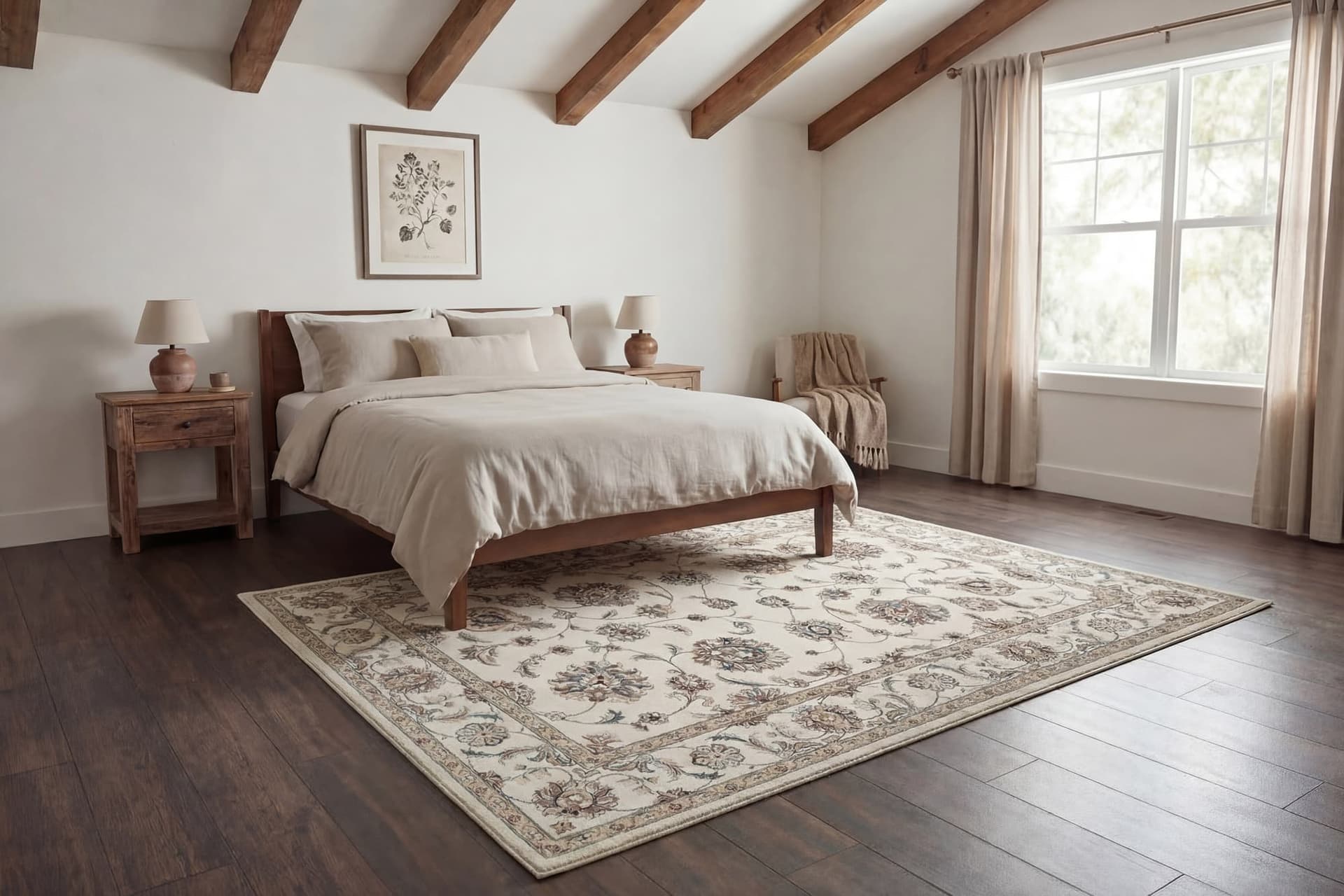
In short: The best rugs for homes with pets are low-pile, cut-pile synthetics. Polypropylene absorbs about 0.01% moisture and is solution-dyed, so accidents sit on the surface long enough to blot and color will not lift during cleaning. Skip viscose, loop pile and shag. Olefin still attracts oily soil and still mats under traffic.
Shopping for rugs for homes with pets means filtering for three specific problems: claws that hook, fur that buries itself in the pile, and liquid that needs to stay on the surface long enough for you to reach a towel. Fiber, pile height and construction decide all three. Everything else is taste.
Here is what the evidence supports, including the places where the popular advice oversells.
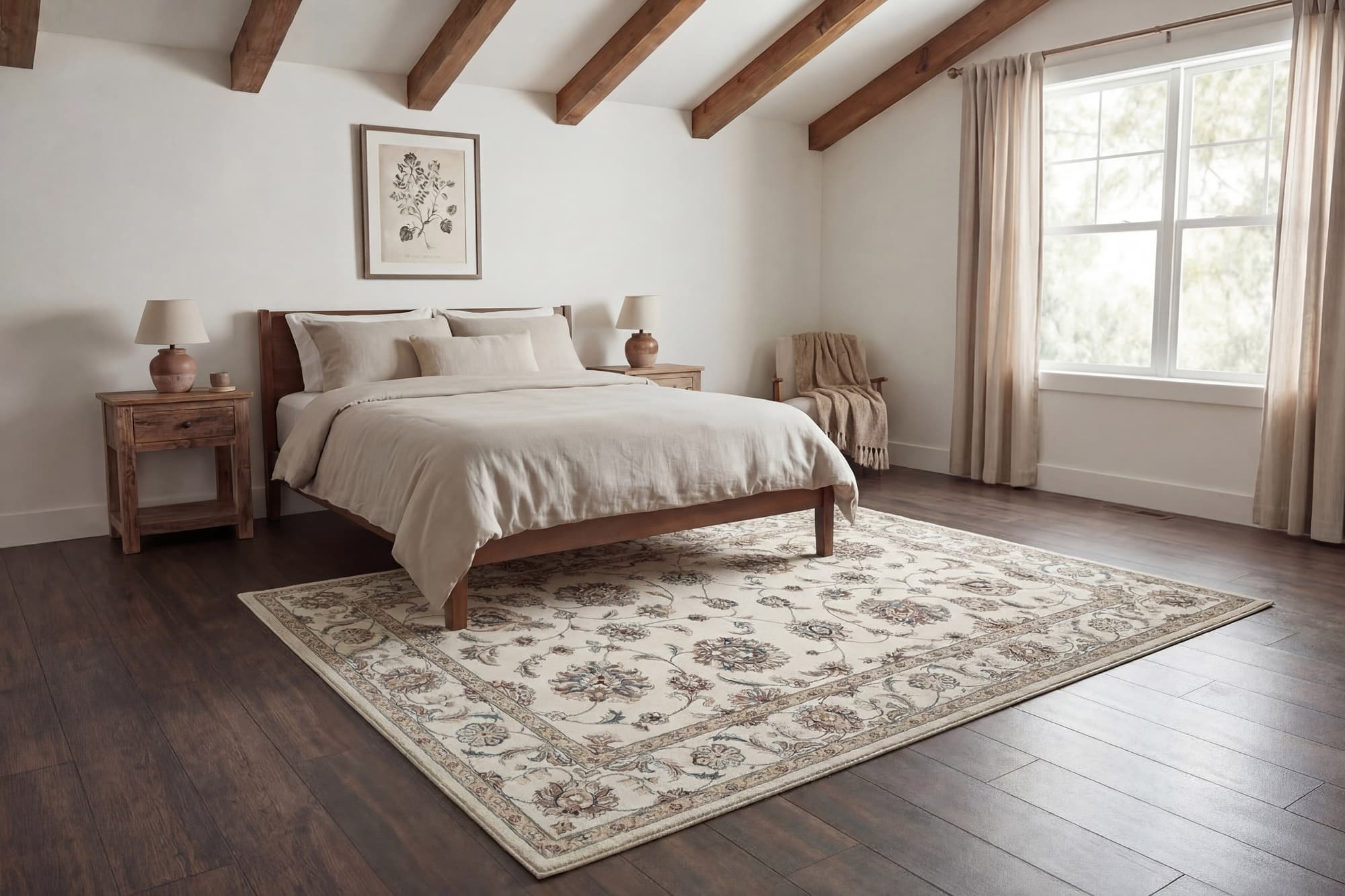 Dahlia Ancient Garden Ivory, heatset polypropylene woven in Belgium.
Why synthetic pile wins for rugs for homes with pets
Polypropylene (olefin) has a moisture absorbency of roughly 0.01%. The fiber is essentially non-absorbent, so a spill or an accident sits on top of the yarn instead of wicking into it. That window is the whole game with pets: it is the difference between blotting a puddle and chasing an odor. The fiber is also solution-dyed, meaning the color is locked into the yarn rather than applied to the surface, which is why colorfastness rates excellent and why bleach, alkali and acid do not strip the pattern.
Polyester (PET) is hydrophobic too, inherently resistant to water-based stains, mold and mildew, and it holds color well. It is less resilient than nylon and can mat in high-traffic lanes, so the same low-pile rule applies.
Three limits worth knowing
Both fibers resist water-based stains. Neither resists oil. Olefin in particular has a strong attraction for oily soils, so pet food grease, driveway oil tracked in on paws and plain skin oil need prompt attention rather than a wait-and-see approach.
Olefin's resilience is rated virtually nil. It mats under traffic, and no fiber treatment changes that. This is the real engineering reason to buy a dense, low pile rather than a tall plush one, and the reason rotating the rug belongs in your care routine.
Polypropylene also melts at 320F (160C). Friction from dragging a sofa across it, or from a vacuum belt, can permanently damage the fibers. No hot steam extraction, ever.
Claws: loop pile is the enemy, cut pile is not
Loop pile is the worst possible construction for a cat. A claw hooks a loop, pulls the yarn out of the backing and leaves a run across the rug. Loops can also trap and injure the claw itself. Cut pile and flatweave have no loops to catch, so scratching ruffles the surface instead of unraveling it. If you have a cat, this single detail matters more than the fiber.
Then work with the cat rather than against it. Scratching is normal maintenance behavior. ASPCA guidance is to redirect it: give the cat a tall, sturdy vertical post plus a horizontal or angled scratcher, in different textures, placed near sleeping and feeding spots. The ASPCA is strongly opposed to declawing.
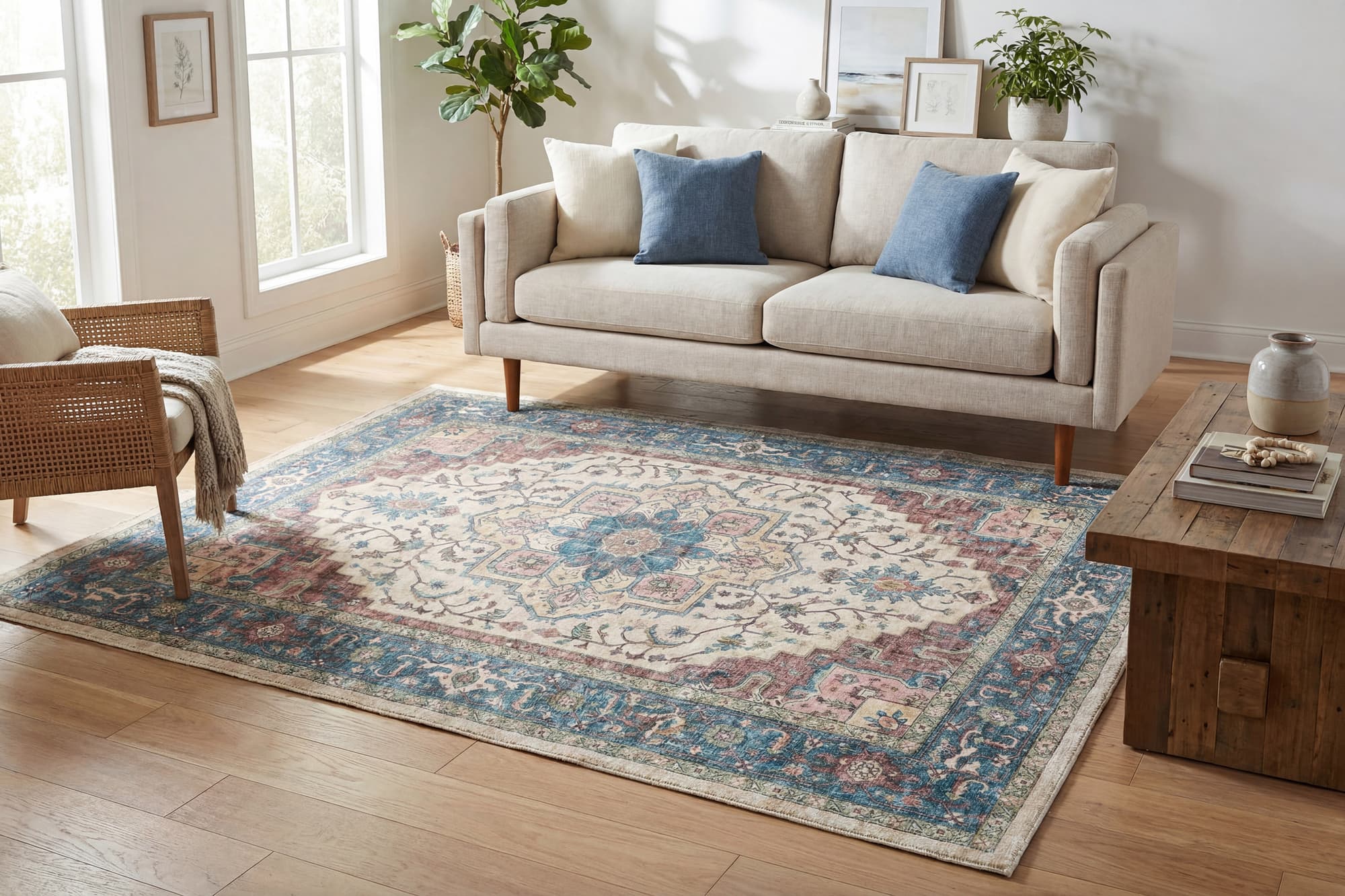 Acadia Elise Red/Blue/Beige, polyester woven in Turkey.
Fur: pile height is the biggest lever you have
Low pile means roughly 1/4 to 1/2 inch. At that height, hair, dander and crumbs stay near the surface, so one vacuum pass actually removes them. In a tall shag, the same hair works its way down toward the backing and stays there.
Low pile also ages better, given how readily olefin flattens. Browse the pet-friendly rugs selection with that in mind and you will notice the density does more work than the pattern.
Accidents: the no-heat rule comes first
Do not reach for a steam cleaner or hot water on a fresh urine spot. Heat sets the proteins in urine, binding them to the fiber and making the odor harder to remove, not easier. The sequence that works:
- Blot with a dry towel. Press firmly. Do not rub.
- Re-wet with cool water to dilute, then blot again.
- Apply an enzymatic cleaner. Enzymes break down the urine molecules that cause lingering smell. Allow about 15 minutes of dwell time for light soiling. For heavy soiling, apply and cover with a damp cloth for 12 to 24 hours.
- Rinse with cold water and blot dry.
The rug pad does two separate jobs
A pet-oriented pad with a rubber or TPR closed-cell backing grips the floor so the rug does not bunch when a dog takes a corner at speed. The same closed-cell construction acts as a moisture barrier, so an accident is less likely to reach the hardwood or laminate underneath. In a pet home, both jobs are worth paying for.
Pattern hides what a pale solid advertises
A mid-tone, multi-color pattern hides tracked-in dirt and light fur between vacuums far better than a solid cream field. This is less about hiding dirt from yourself and more about how the room reads on day four instead of day one. Traditional multi-color designs like the Ancient Garden and Mehari collections are unusually forgiving for this reason.
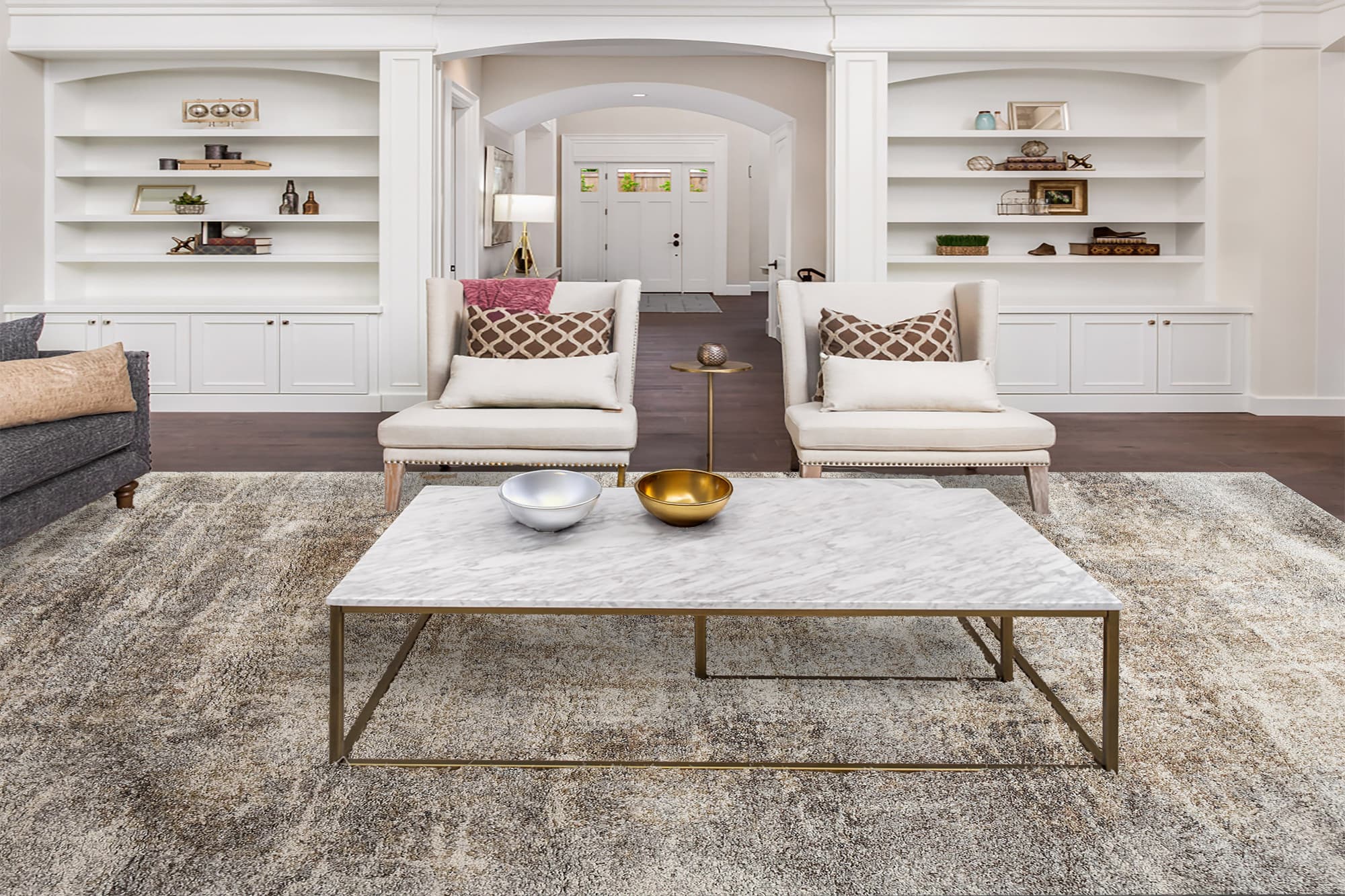 Orchard Mehari Ivory/Rust/Multi, decolan polypropylene woven in Belgium.
Materials to avoid, in order
- Viscose and rayon. Avoid outright. The fiber loses strength dramatically when wet, and urine causes permanent yellowing from urea plus dye migration that professional washing cannot reverse. Viscose fibers break after about 70 bends, against roughly 10,000 for wool.
- High-pile shag. Traps hair and dander where a vacuum cannot reach.
- Loop pile. See above.
Wool deserves its own note. It is lovely underfoot, but it is a protein fiber: absorbent, and the alkaline and acid components of urine can cause permanent dye and fiber damage. The initial beading you see on wool comes from lanolin, not from a barrier. None of the stain resistance and aggressive-cleaning advantages described above for polypropylene and polyester transfer to wool or viscose.
Placement map for a pet home
Standard sizing rules still apply. Use them.
- Entry: a runner catches the worst of what comes in on paws. Runners are typically 2 to 3 ft wide, with 2x6, 2x10, 2.5x8 and 3x10 among the common sizes.
- Food and water: a small low-pile piece, 3x5 or 4x6, under the bowls.
- Main room: 5x7 or 6x9 for living rooms up to about 200 sq ft, 8x10 for 200 to 400 sq ft, 9x12 or larger above that. Get at least the front legs of the sofa and chairs on the rug, and leave roughly 12 to 18 inches of bare floor to the walls.
- Dining: add 24 inches to each side of the table footprint so chairs stay on the rug when pulled back.
- Bedroom: extend about 2 ft beyond the bed on the sides and foot.
A realistic care routine
Vacuum the traffic lanes often, with the beater bar off or on its highest setting. Spot-treat as things happen, especially anything oily. Rotate the rug a couple of times a year, since olefin's limited resilience means the same footpath flattens first. Lift furniture instead of dragging it, because friction alone can damage the fiber.
Frequently asked questions
Are polypropylene rugs really good for dogs and cats?
Yes, for the reasons that actually matter. The fiber absorbs about 0.01% moisture and is solution-dyed, so spills and accidents sit on the surface long enough to blot and the color will not lift out during cleaning. It is also chemically inert and unaffected by bleach and acid.
It is not damage-proof and it is not a moisture barrier. It attracts oily soil, so pet food grease and anything tracked in from a driveway still need prompt attention rather than a weekend of waiting. It also mats under traffic, which is why a dense low pile outlasts a plush one.
Will my cat's claws ruin the rug?
The risk comes from loop pile, where a claw hooks a loop and pulls yarn out of the backing, leaving a visible run. A cut-pile rug has no loops to catch, so scratching tends to ruffle the surface rather than unravel it.
Pair the rug with a proper scratching setup. The ASPCA advises redirecting the behavior with a tall vertical post and a horizontal or angled scratcher in different textures, placed near where the cat sleeps or eats, rather than trying to stop scratching altogether.
What rug material should I avoid if I have pets?
Viscose and rayon, without qualification. The fiber weakens dramatically when wet, and urine causes permanent yellowing from urea plus dye migration that professional cleaning cannot undo. For scale, viscose fibers break after roughly 70 bends where wool takes about 10,000. After that, skip high-pile shag, which buries hair beyond the reach of a vacuum, and loop pile, which gives claws something to hook.
Wool is a separate case. It is durable and pleasant underfoot, but as a protein fiber it absorbs moisture and urine can cause permanent dye and fiber damage. None of the stain and cleaning advantages of polypropylene or polyester apply to it.
How do I get dog pee out of a rug?
Blot with a dry towel, pressing firmly rather than rubbing. Re-wet with cool water to dilute, then blot again. Apply an enzymatic cleaner and give it time: about 15 minutes for light soiling, or cover the spot with a damp cloth for 12 to 24 hours if it is heavy. Rinse with cold water and blot dry.
Do not use a steam cleaner or hot water. Heat sets the proteins in urine into the fiber and makes the smell harder to remove. Polypropylene also melts at 320F, so hot extraction risks the rug as well as the odor.
Where to start
Look for cut pile, low height, a mid-tone multi-color pattern and a synthetic fiber. Our range is machine-woven on power looms in Belgium and Turkey, which is what keeps a densely constructed polypropylene rug affordable enough to put in the hallway a dog actually uses.
Start with the pet-friendly rugs selection, or browse the Legacy and Eclipse collections for lower-contrast options. Shipping is free on every order and returns run 30 days with no restocking fee, so you can see how a rug lives with your household before you commit. Shop the full range.