
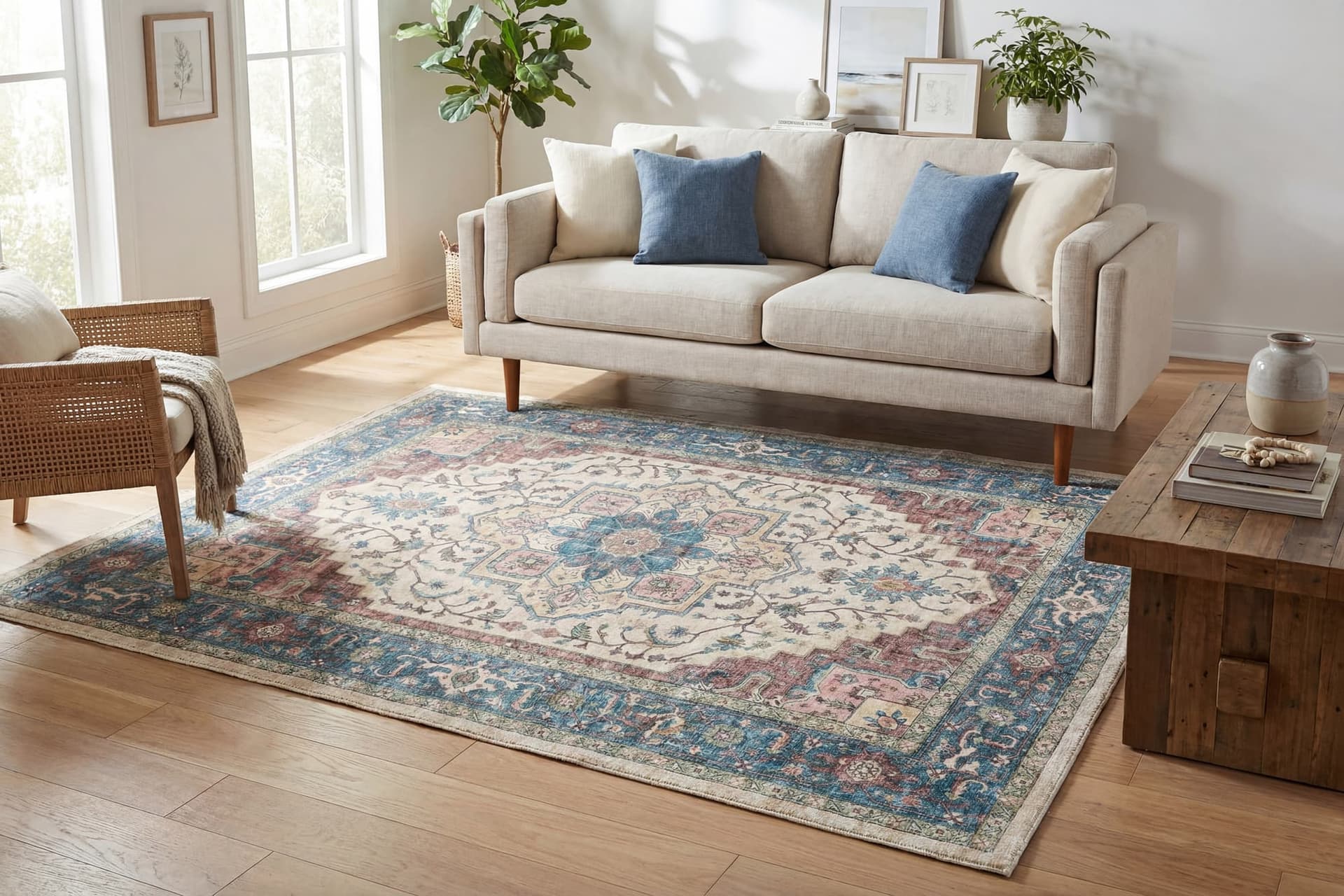
In short: Yes, you need a rug pad. It protects your floor from scratches, keeps the rug from slipping and bunching, adds cushioning underfoot, and improves airflow so dirt doesn't get trapped. Choose a pad 1 to 2 inches smaller than your rug on all sides, and match the material to your floor type (felt for vinyl and heated floors, felt-rubber combos for most everything else).
If you've ever wondered whether a rug pad is really worth the extra purchase, you're not alone. It looks like an optional accessory, but it's doing more structural work than most people realize. A good rug pad sits quietly under your rug and protects two things you've already spent money on: your floor and your rug.
This guide covers why a rug pad matters, how to size one correctly, which material fits which floor, and how to pick the right thickness for the room. We'll also cover why this advice applies especially to machine-made rugs like the ones we sell at Loom Genie.
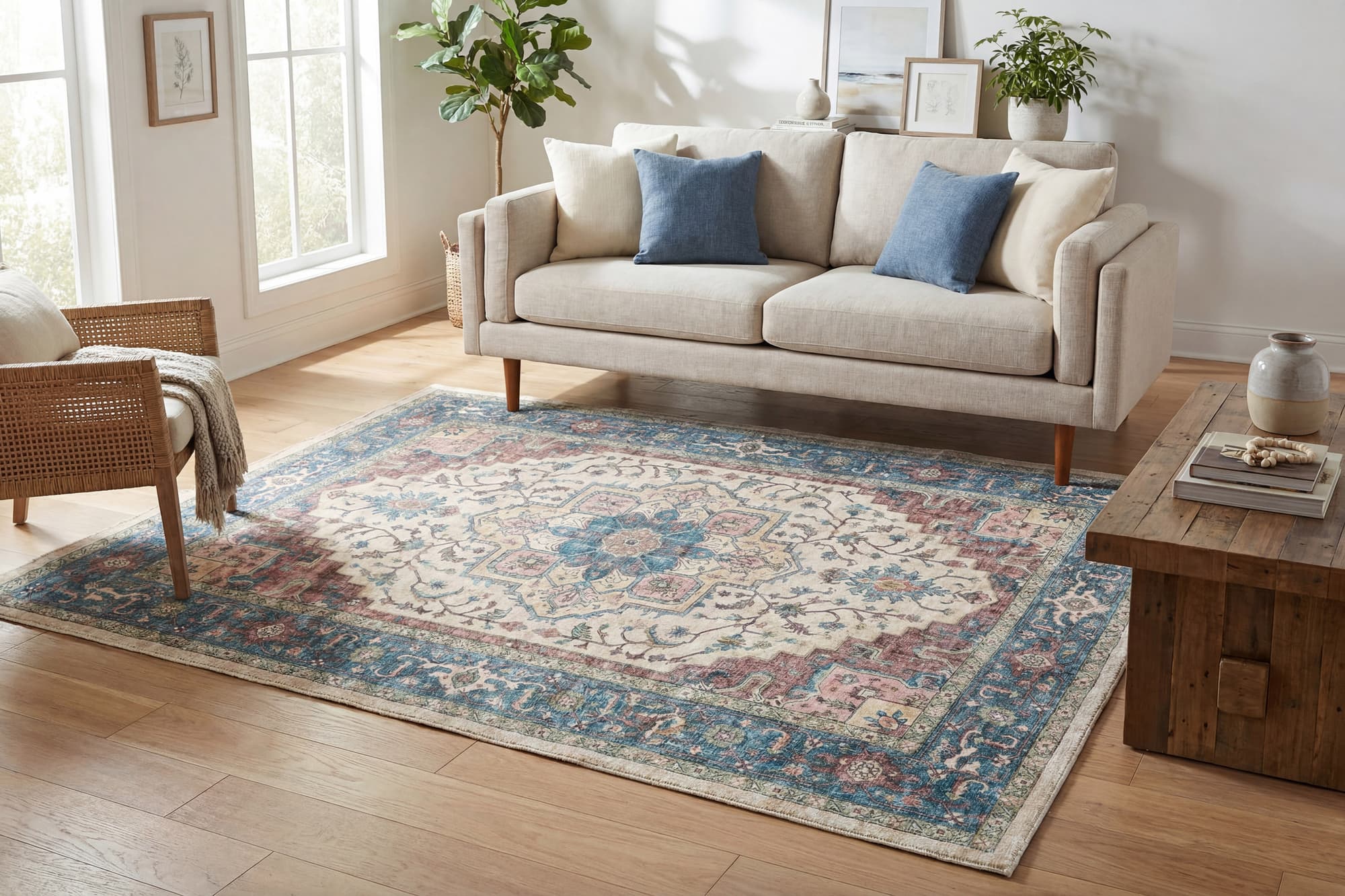 Acadia Elise Red/Blue/Beige, polyester woven in Turkey.
The core case for a rug pad
A rug pad is a barrier layer between your rug and your floor, and it does several jobs at once:
- Floor protection. Rug backings and the grit that gets trapped underneath can scratch, scuff, or dull hardwood finishes over time. A pad keeps that abrasive contact from happening directly against the floor.
- Longer rug life. Friction between a rug and a hard floor wears down both surfaces. A pad reduces that friction, which slows wear on the rug's backing as well as the floor.
- Grip and safety. Pads help anchor a rug in place, cutting down on slipping and bunching. That matters most on hard flooring, where a rug that shifts underfoot is a real trip-and-fall risk.
- Cushioning. A pad adds a soft layer that makes the rug feel better underfoot and absorbs some of the impact of daily foot traffic, which reduces stress on the rug's fibers.
- Airflow and easier cleaning. Pads let air circulate underneath the rug, which keeps dirt, allergens, and moisture from getting trapped against the floor. That also makes vacuuming more effective at pulling embedded grit out of the rug rather than just pushing it around.
None of this requires a fancy setup. A rug pad is a simple, inexpensive layer that pays for itself in floor protection alone.
For a broader look at our full range, browse the shop while you plan your pad purchase alongside any new rug.
How to size a rug pad correctly
The standard rule: choose a pad that's 1 to 2 inches smaller than your rug on all four sides. That keeps the pad hidden under the rug so it doesn't peek out and create its own trip edge.
Here's how that shakes out for common sizes:
- 4x6 rug: roughly a 3'10" x 5'10" pad
- 5x8 rug: roughly a 4'10" x 7'10" pad
- 6x9 rug: roughly a 5'10" x 8'10" pad
- 8x10 rug: roughly a 7'10" x 9'10" pad
- 9x12 rug: roughly an 8'10" x 11'10" pad
One measuring note that trips people up: if your rug has fringe, exclude it. Measure only the woven or tufted body of the rug, since the pad should support that part, not the decorative fringe on the ends.
If you're still deciding on a rug size for a room, our 8x10 area rugs landing page and general sizing guidance can help you land on the right dimensions before you shop pads.
Matching pad material to your floor type
Not all rug pads work on all floors, and picking the wrong one can cause real damage. Here's the breakdown:
Felt. Felt pads cushion well and add some sound dampening, but they grip poorly on their own and don't hold up well to moisture. That makes felt a weak standalone choice for kitchens, bathrooms, or anywhere it might get wet.
Natural rubber. Rubber pads grip well even at a thin profile, but they don't offer much cushioning by themselves.
Felt-rubber combination. This is the most commonly recommended general-purpose pad. It pairs the cushioning of felt with the grip of rubber, giving you both benefits in one product.
What to avoid: PVC/vinyl-based pads. These can off-gas and react with floor finishes over time, sometimes causing yellowing, stickiness, or discoloration. This is a particular risk on vinyl plank (LVP) flooring and on some finished hardwood.
If you have vinyl plank flooring specifically, skip rubber, latex, and PVC-backed pads altogether, even ones marketed as "non-slip." Pure felt is the safer bet, since it has no plasticizers or compounds that can react with the vinyl.
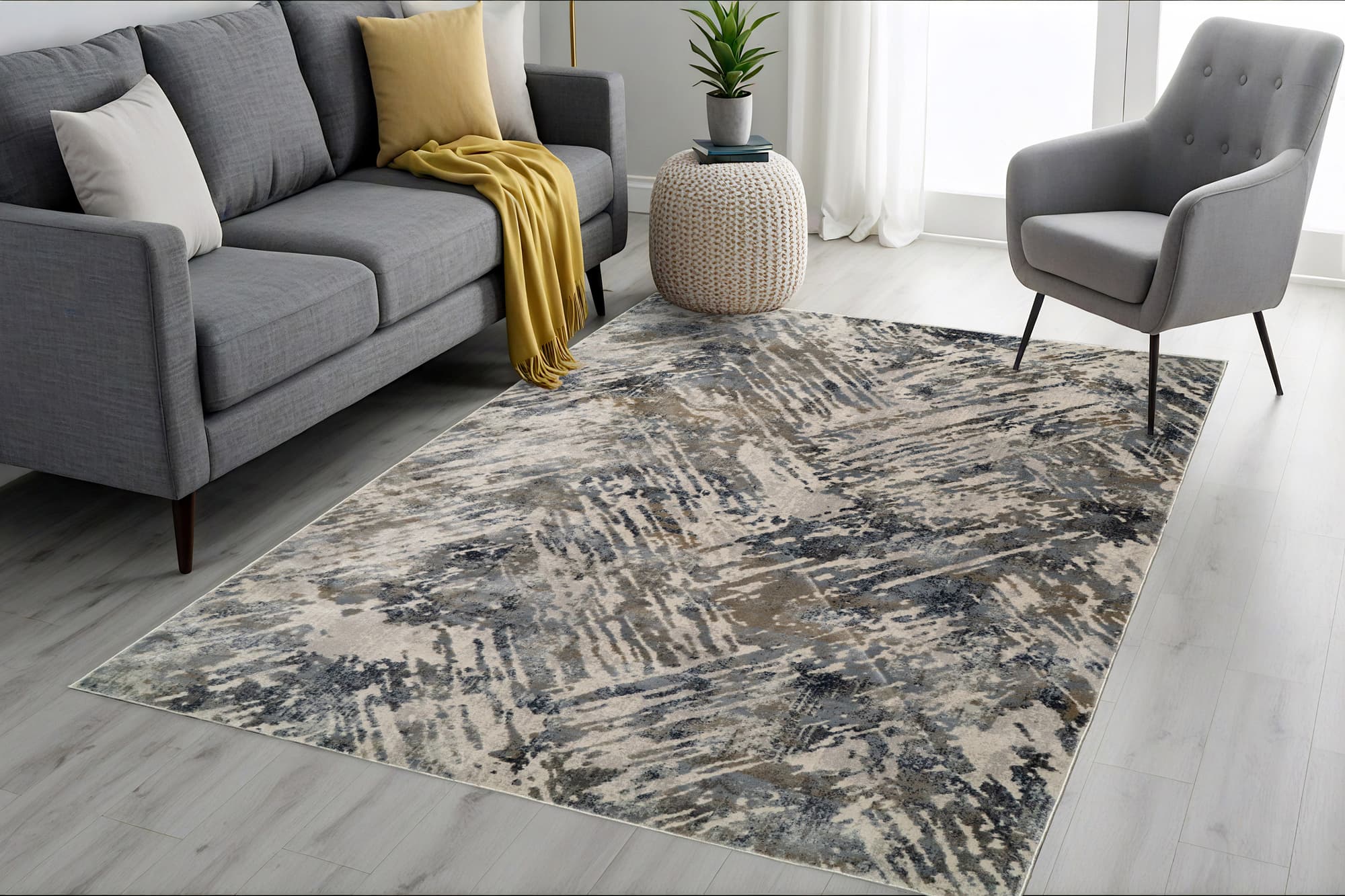 Twilight Castilla Grey/Blue, shrink polyester and polypropylene woven in Turkey.
Special cases: heated floors, runners, rounds, and rugs on carpet
A few situations call for a slightly different approach:
Radiant or underfloor heating. Natural felt is generally considered safe here. Thick foam or solid rubber pads are discouraged because they insulate and trap heat, which reduces your heating system's efficiency. Some sources also note that natural rubber can soften and get tacky under sustained heat, so felt is the safer default if you have heated floors.
Runners in hallways. Hallways see heavy foot traffic in a narrow footprint, so grip and a low profile matter more than plush cushioning. Browse our runner rugs landing page if you're shopping for a hallway piece, and pair it with a thinner, grippier pad.
Rounds and ovals. The same 1 to 2 inch smaller rule applies. Measure the diameter (or length and width for ovals) and size the pad down accordingly so it stays tucked out of sight.
Rugs on carpet. Layering a rug over carpet calls for a thin, firm pad rather than felt, which can compress and let the rug bunch or shift on the soft surface underneath.
Thickness by room and traffic level
Thickness isn't one-size-fits-all for a rug pad. Match it to how the room gets used:
- 1/8" to 3/16" (thin): Best for high-traffic zones like hallways and entryways, where grip and a low trip profile matter more than plush feel.
- 1/4" (the sweet spot): A versatile middle ground that balances cushioning and stability, well suited to living rooms and dining rooms.
- 3/8" to 1/2" (plush): Suited to low-traffic spaces like bedrooms, where you want more cushion underfoot and stability is less of a concern.
If you're outfitting a living room, check our living room rugs landing page for sizing that already accounts for furniture layout, then pick a 1/4" pad as your default starting point. You can also browse the shop for styles across sizes and colorways.
Why a rug pad matters for machine-made rugs
All the rugs we carry at Loom Genie are machine-made, using durable materials like polypropylene and polyester, including shrink-poly blends that create texture and dimension. These are flatter, denser constructions than a soft, loosely backed weave, and a rug pad complements that construction well: it protects the backing from floor contact, keeps the rug from sliding around on hard surfaces, and helps the rug lie flat rather than curling at the edges.
Because our rugs are synthetic, many of them also carry a pet-friendly quality: polypropylene and polyester resist stains and clean up easily, which is a real strength worth pairing with a good pad. If that's a priority for your household, our pet-friendly rugs landing page is a good place to start, and a felt-rubber pad underneath adds grip and cushioning without compromising that easy-care advantage.
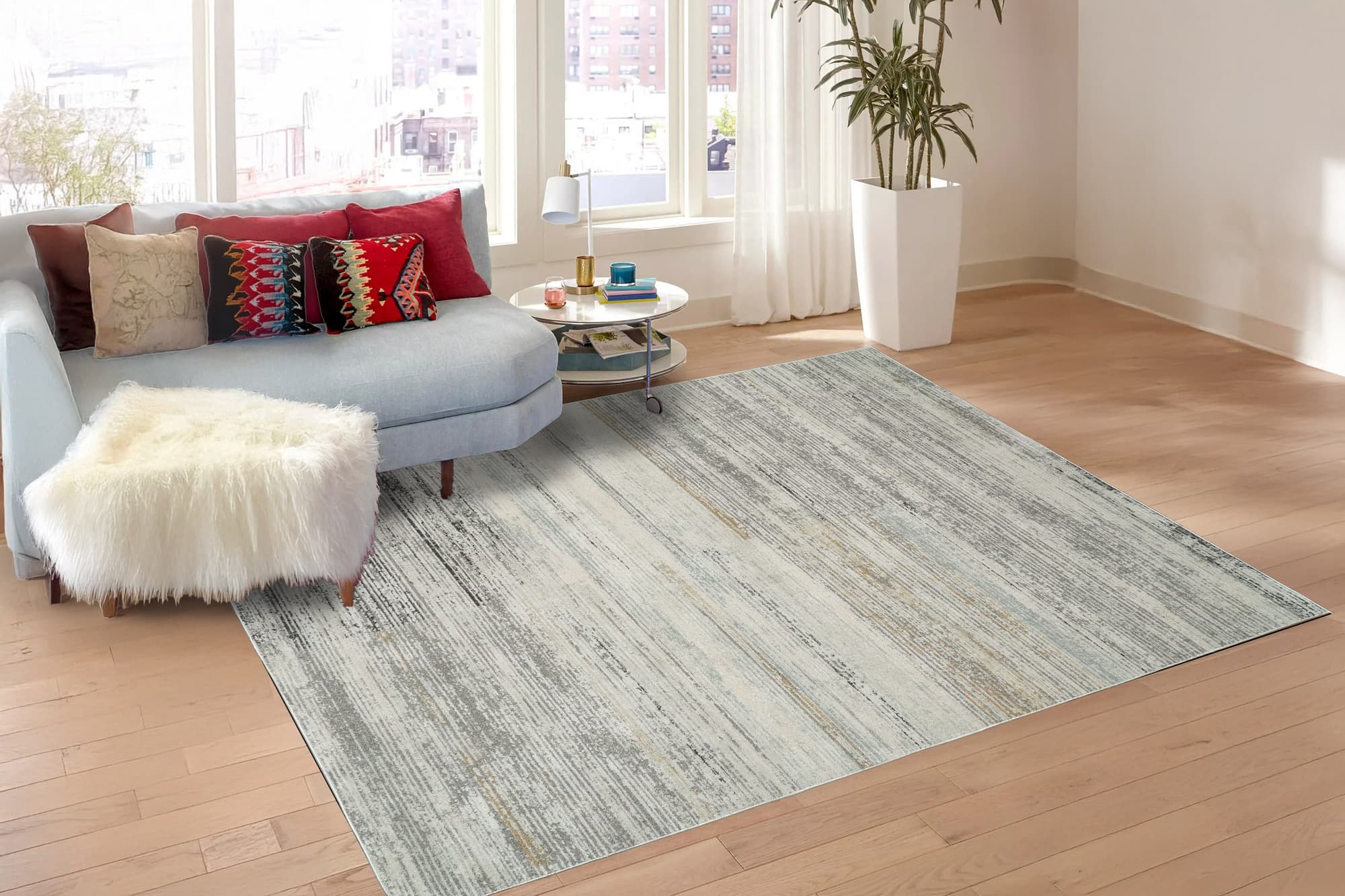 Tidepool Annalise Grey/Beige/Charcoal, polypropylene and shrink polyester woven in Turkey.
Quick buying checklist
Before you buy a rug pad, run through this:
- Floor type. Hardwood or finished floors: avoid PVC. Vinyl plank: felt only. Heated floors: felt only. Tile: felt-rubber combo works well. Carpet: thin, firm pad, not felt.
- Rug size. Measure the woven body (no fringe), then subtract 1 to 2 inches per side.
- Traffic level. High traffic (entryways, hallways): thin, grippy pad. Medium traffic (living, dining): 1/4" combo pad. Low traffic (bedrooms): thicker, plush pad.
Match those three, and you've got the right pad.
Frequently asked questions
Do I really need a rug pad, or is it optional?
It's not strictly required, but it's worth doing for nearly any rug on a hard floor. A pad meaningfully protects your flooring, extends the life of the rug, improves grip and safety, and adds cushioning underfoot. Given how inexpensive pads are relative to the rug and floor they protect, most people find it's an easy addition rather than a skippable extra.
What size rug pad should I buy?
Choose a pad about 1 to 2 inches smaller than your rug on all sides. That keeps the pad fully hidden underneath the rug so it doesn't create its own edge that could catch a foot. Measure only the rug's woven or tufted body, not any fringe, before you calculate the pad size.
Is felt or rubber better for a rug pad?
Felt cushions well and adds some sound dampening, but it grips poorly on its own and doesn't hold up well to moisture. Rubber grips well even at a thin profile, but it doesn't offer much cushioning by itself. Combination felt-rubber pads give you both the cushioning and the grip, which is why they're the most commonly recommended general-purpose option for most rooms and floors.
Can I use any rug pad on vinyl plank (LVP) flooring?
No. Avoid rubber, latex, or PVC-backed pads on vinyl plank flooring, even ones marketed as "non-slip," since they can react with the vinyl and cause staining or yellowing over time. Pure felt is the safer choice here, because it doesn't contain the plasticizers or compounds that cause that reaction.
What rug pad thickness should I choose?
Use a thinner pad, around 1/8 to 3/16 inch, in high-traffic areas like entryways and hallways, where grip and a low trip profile matter most. A 1/4 inch pad is a good general-purpose choice for most living and dining rooms. Thicker pads in the 3/8 to 1/2 inch range suit low-traffic rooms like bedrooms, where a plush feel matters more than maximum stability.
If you're not sure which pad fits your setup, our team is happy to help, and you can always browse the shop for rugs and accessories in the meantime.
Find your next rug
A rug pad is a small step that protects a bigger investment: the floor underneath and the rug on top. Once you've got the pad sorted, browse our full shop for machine-made rugs in sizes and materials to fit any room, from entryway runners to living room anchors.