
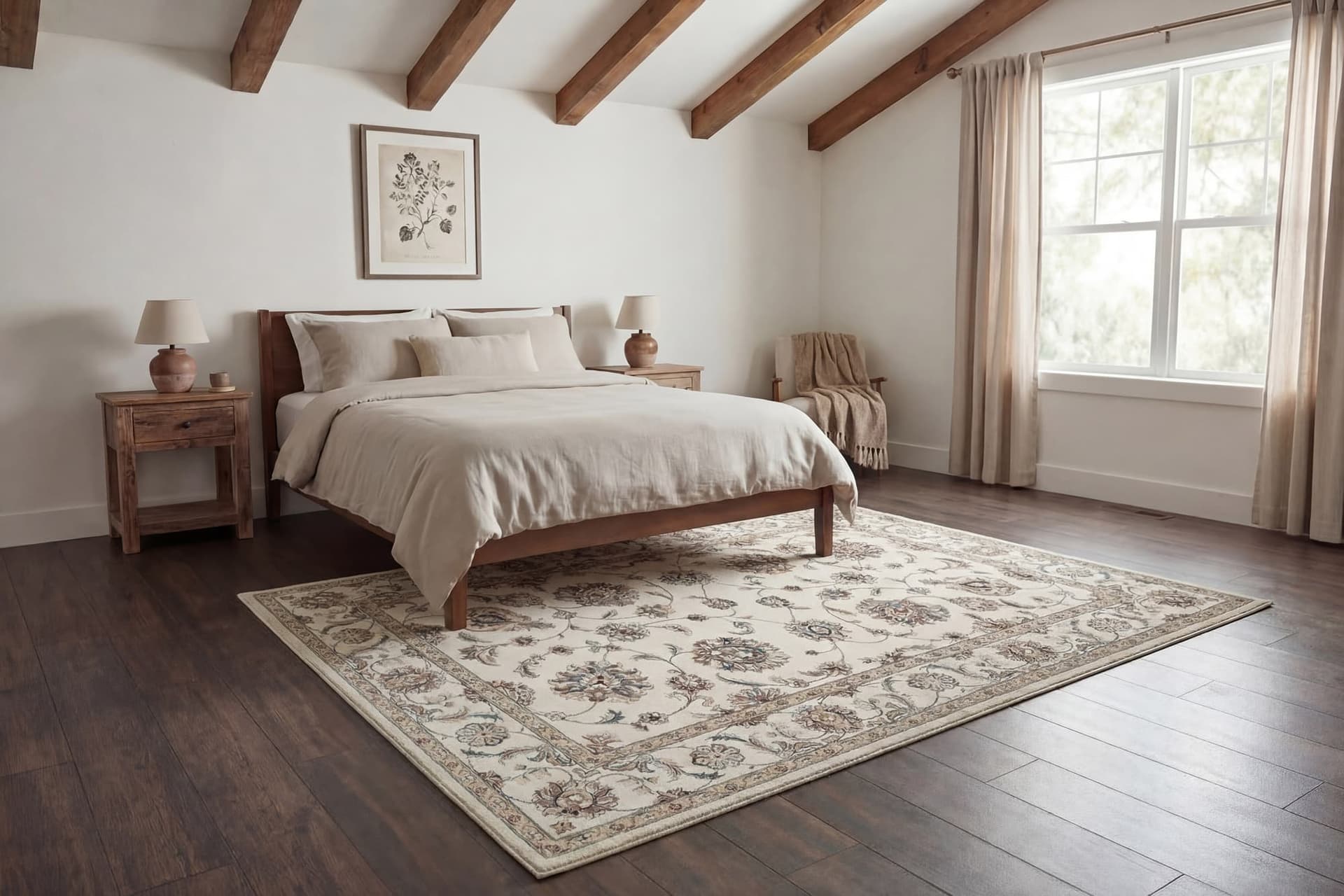
In short: Vacuum an area rug weekly in quiet rooms, about twice a week in medium-traffic rooms, and daily in busy spots or anywhere pets spend time. Clean spills right away, rotate every 3 to 6 months, deep clean at home about twice a year, and book a professional clean every 12 to 18 months.
If you have ever wondered how often to clean an area rug, the honest answer is that it depends on who walks on it. A hallway runner that greets a muddy dog twice a day needs more attention than a rug under a guest bed. This guide gives you a simple schedule by traffic, room and household. Pets come first, because paws, fur and the occasional accident change the math more than anything else.
Most of the frequencies below come from the Carpet and Rug Institute (CRI). Their guidance was written for wall-to-wall carpet, so treat it as a sensible baseline for area rugs rather than a rulebook. Adjust up or down based on what you see and smell.
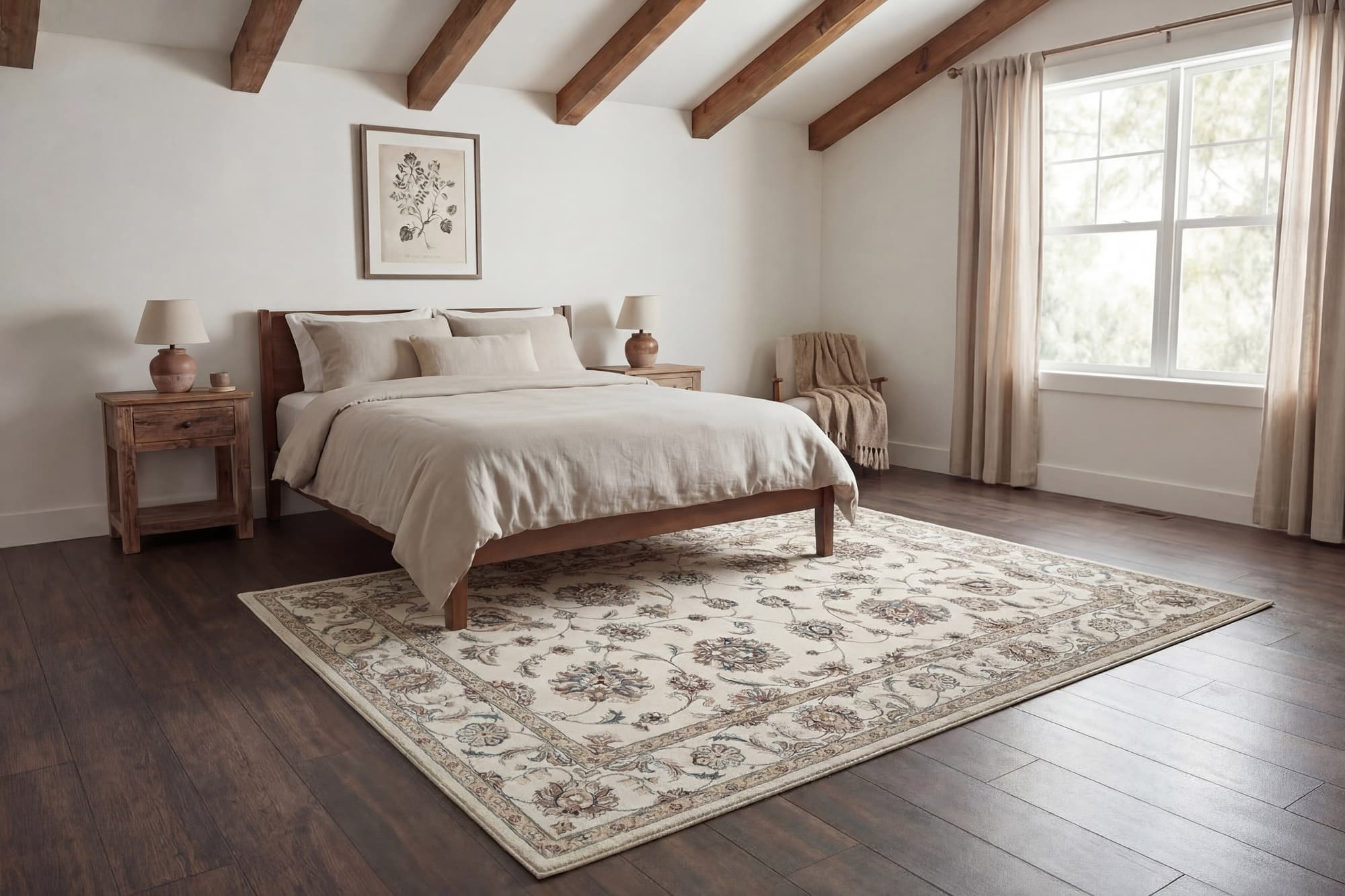 Dahlia Ancient Garden Ivory, heatset polypropylene woven in Belgium.
How often to clean an area rug: the quick schedule
| Task | Light traffic | Medium traffic | High traffic |
|---|---|---|---|
| Vacuum | Weekly | About twice a week | Daily |
| Spot clean | Right away | Right away | Right away |
| Rotate | Every 6 months | Every 3 to 6 months | Every 3 months or sooner |
| Home deep clean | Every 6 to 12 months | Twice a year (spring and autumn) | Twice a year (spring and autumn) |
| Professional clean | Every 12 to 18 months | Every 12 to 18 months | Every 12 to 18 months, or sooner |
| Pets in the room | Treat it as high traffic: vacuum daily, clean accidents immediately | Same | Same |
A note on that professional row: CRI recommends a professional deep clean every 12 to 18 months. Many cleaning companies suggest every 6 to 12 months for homes with pets, kids or allergies. That is a reasonable suggestion from the industry, not a formal standard.
Homes with pets: start here
CRI's advice is simple: treat any room where your pets spend time like a high-traffic area and vacuum it daily. Dust, pollen and pet dander tend to collect along the edges of a room, so run the vacuum along the rug's borders too, not just through the middle.
Accidents are where timing matters most:
- Act right away. Blot with a dry white cloth until the spot is nearly dry. Never scrub, which pushes the mess deeper and roughs up the pile.
- Skip the steam cleaner on urine. CRI warns that heat sets both the stain and the odor. Extract with a wet vac instead and rinse with cool water.
- Use an enzymatic cleaner on dried urine. Once urine dries, it leaves uric acid crystals that regular soap cannot break down. An enzymatic pet stain cleaner is built for that job.
Your rug choice helps, too. Edward Martin notes that synthetic rugs are generally the easiest to clean, often needing only regular vacuuming and occasional spot cleaning. Darker colors and busy patterns also hide pet hair and small spills between cleanings. Browse our pet-friendly rugs or a deep-toned collection like Legacy if your dog sheds year-round.
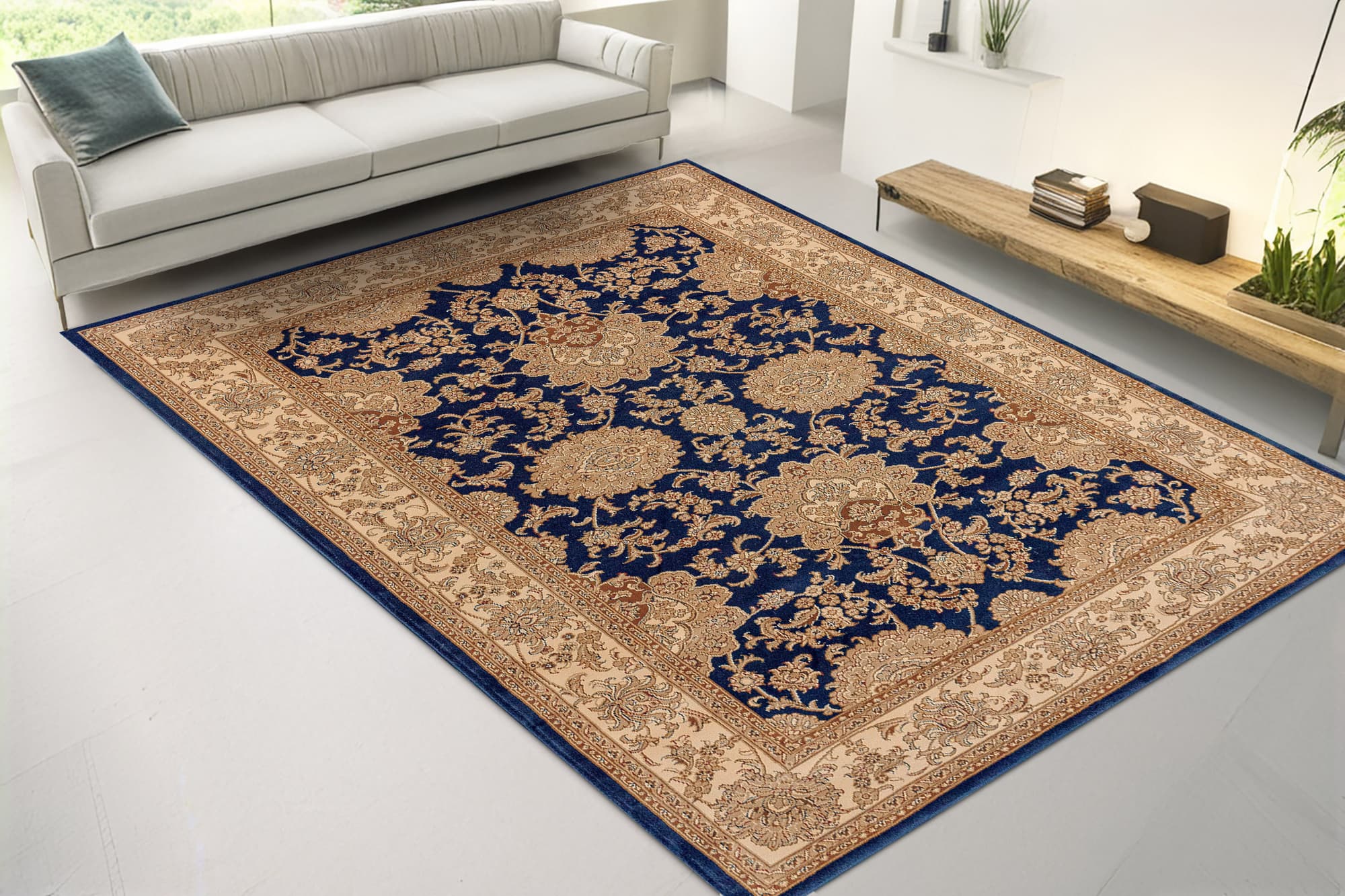 Acacia Legacy Navy, polypropylene woven in Turkey.
A cleaning schedule by room
Entryway and hallway runners
These are your highest-traffic rugs. Vacuum daily, or as close to it as you can manage. CRI recommends mats both outside and inside entryways to catch grit before it reaches the rug. If you are shopping for a hallway, see our runner rugs.
Living room
Most living rooms are medium traffic, so about twice a week is a good rhythm. Bump it to daily if the dog naps there or the kids play on the floor. Furniture layout concentrates foot traffic and sunlight in the same spots, so rotating every 3 to 6 months keeps wear and fading even. Our living room rugs and 8x10 area rugs are good starting points for this room.
Dining room
Crumbs and spills are the main story here. Vacuum about twice a week and spot clean the moment something drops. Food grease is the one stain that needs extra help (more on that below).
Kids' playroom
Treat it as high traffic. Daily vacuuming and immediate spot cleaning keep sticky messes and tracked-in dirt from building up.
Bedroom
Bedrooms and guest rooms are usually light traffic, so weekly vacuuming is enough for most homes. Round and oval rugs by the bed benefit from a turn every few months as well, since you step onto the same spot every morning.
Homes with kids and allergies
Kids bring the same pressure as pets: more dirt, more spills and more time on the floor. Treat play zones as high traffic and consider the shorter end of the professional cleaning range.
For allergy households, the Asthma and Allergy Foundation of America (AAFA) recommends:
- Vacuuming once or twice a week with a certified asthma and allergy friendly vacuum
- Wearing a mask while you vacuum
- Leaving the house for several hours after cleaning
- Keeping pets out of bedrooms and washing their belongings often
CRI adds one more habit that is easy to forget: change your HVAC filters regularly.
Caring for synthetic fibers
Most of our rugs are machine-made from synthetic fibers such as heatset polypropylene, and the range is woven in Belgium and Turkey. That is a real advantage for busy homes. Polypropylene is hydrophobic, meaning it repels water, so spills tend to sit on the surface long enough for you to blot them up.
A few things to know:
- Oil and grease are the exception. Polypropylene resists most stains, but oily ones cling. A little dish soap cuts grease.
- Heat is the weak point. High-heat steam can melt or distort the pile and weaken the backing adhesive. Cool to lukewarm water does the job.
- Never use a dryer. Air-dry only.
- Dry it completely. Give the rug good airflow so mold does not grow on the backing. Drying time depends on your weather and humidity, so check that the backing feels fully dry before you put the rug back down.
- Shake out the grit. CRI suggests beating larger rugs over a clothesline, then vacuuming. Vacuum fringe gently, working from the center outward.
Collections like Mehari and Ancient Garden show how patterned polypropylene can look traditional while staying easy to live with.
 Orchard Mehari Ivory/Rust/Multi, decolan polypropylene woven in Belgium.
Signs your rug needs cleaning now
A schedule is a guide, not a promise. Clean sooner if you notice:
- A lingering sour or musty odor
- Colors that look dull or dingy
- Darker lanes where people usually walk
- A matted or gritty feel underfoot
- Stains that keep coming back after you clean them
- Allergy flare-ups at home
- Vacuuming no longer makes a visible difference
Habits that stretch the time between cleanings
- Shoes off at the door. Less grit reaches the rug in the first place.
- Mats outside and inside entryways. They trap dirt before it spreads.
- Use a rug pad. It keeps the rug in place and gives it a stable base.
- Rotate on schedule. Traffic and sunlight get spread evenly.
- Blot, never rub. Rubbing spreads a spill and frays the pile.
- Vacuum regularly. CRI notes that soil left in the pile damages fibers and shortens a rug's useful life.
Frequently asked questions
How often should I vacuum an area rug?
The Carpet and Rug Institute recommends vacuuming weekly in light-traffic rooms, about twice a week in medium-traffic rooms, and daily in high-traffic areas or anywhere pets spend time. Their guidance was written for carpet, but it works well as a baseline for area rugs.
How often should an area rug be professionally cleaned?
The Carpet and Rug Institute recommends a professional deep clean every 12 to 18 months to remove dirt that regular vacuuming leaves behind. Busy homes with pets or kids may need it more often, and many cleaning companies suggest every 6 to 12 months in those cases.
I have a dog or cat. How often should I clean my rug?
Vacuum daily in any room where your pet spends time, and clean accidents right away. Blot with a dry white cloth, extract with a wet vac, and rinse with cool water. Use an enzymatic cleaner on dried urine, and avoid steam, which can set the stain and odor.
Can I steam clean a polypropylene rug?
Rug care guidance generally advises against steam cleaning polypropylene. High heat can melt or distort the fibers and weaken the backing adhesive. Cool to lukewarm water works well, and the rug should air-dry completely rather than go in a dryer.
How do I know my rug needs a deep clean?
Watch for a lingering musty or sour smell, dull colors, darker traffic lanes, a gritty or matted feel, or stains that keep returning. If vacuuming no longer makes a visible difference, it is time for a deeper clean.
Find a rug that fits your routine
The easiest rug to keep clean is one that suits how your household actually lives. If you want something that handles pets, kids and busy hallways without much fuss, take a look around our shop. Shipping is free on every order in the contiguous US, and returns are accepted within 30 days with no restocking fee.