
In short: A viscose rug is wood pulp dissolved and re-spun into smooth, reflective filament, so it reads like silk under light. It is also the thirstiest fiber on the floor, and it loses roughly half its strength when it is wet. Ours are blends: sheen from viscose, backbone from polyester or acrylic. Keep it out of kitchens, entryways and pet homes.
Ask ten people what viscose is and you will get ten answers, most of them wrong. So here are viscose rugs explained plainly: what the fiber is, why it glows the way it does, what it genuinely cannot handle, and which rooms in your home will make it look like money well spent. We sell viscose blends, we like them, and we are going to tell you exactly where they fail.
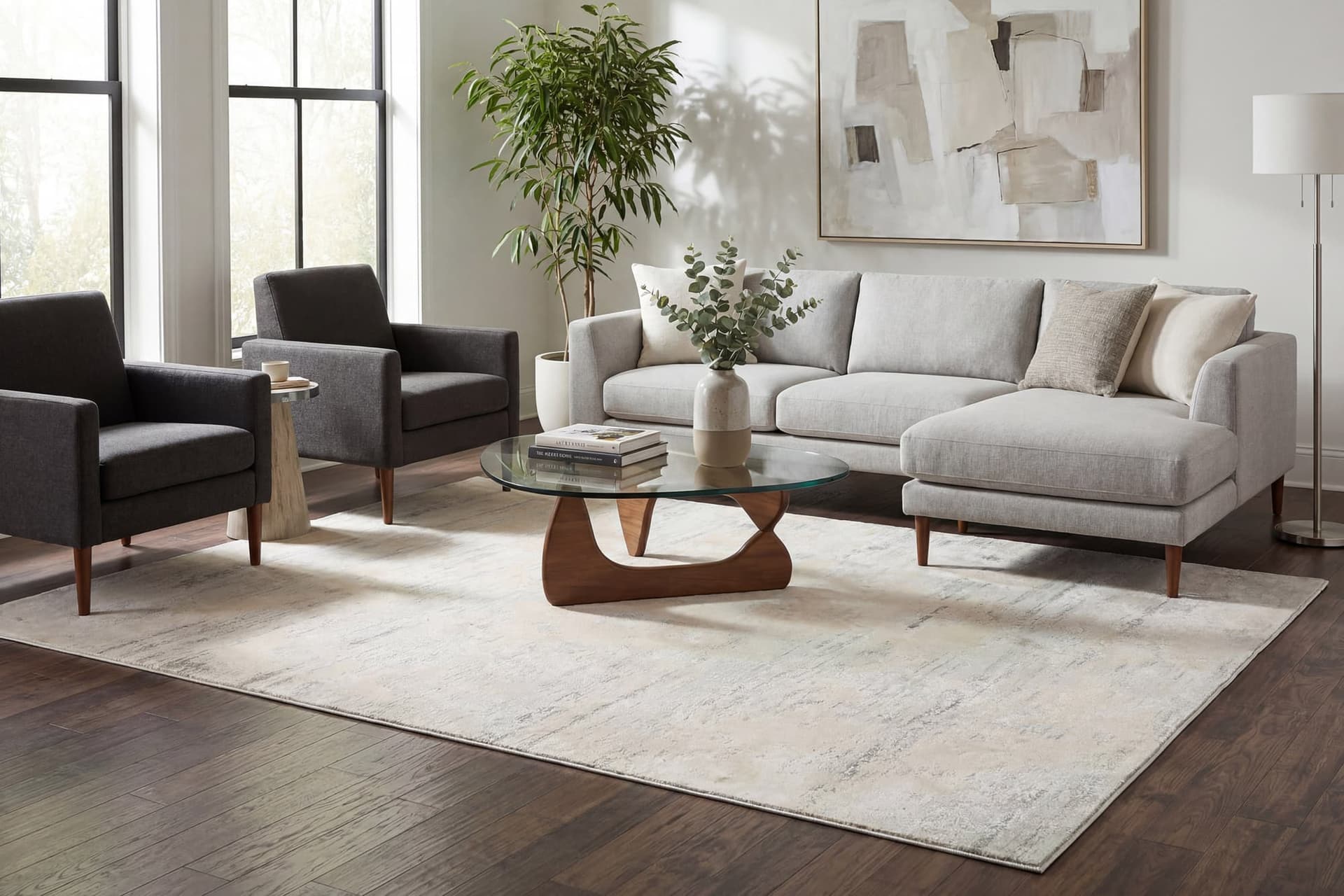
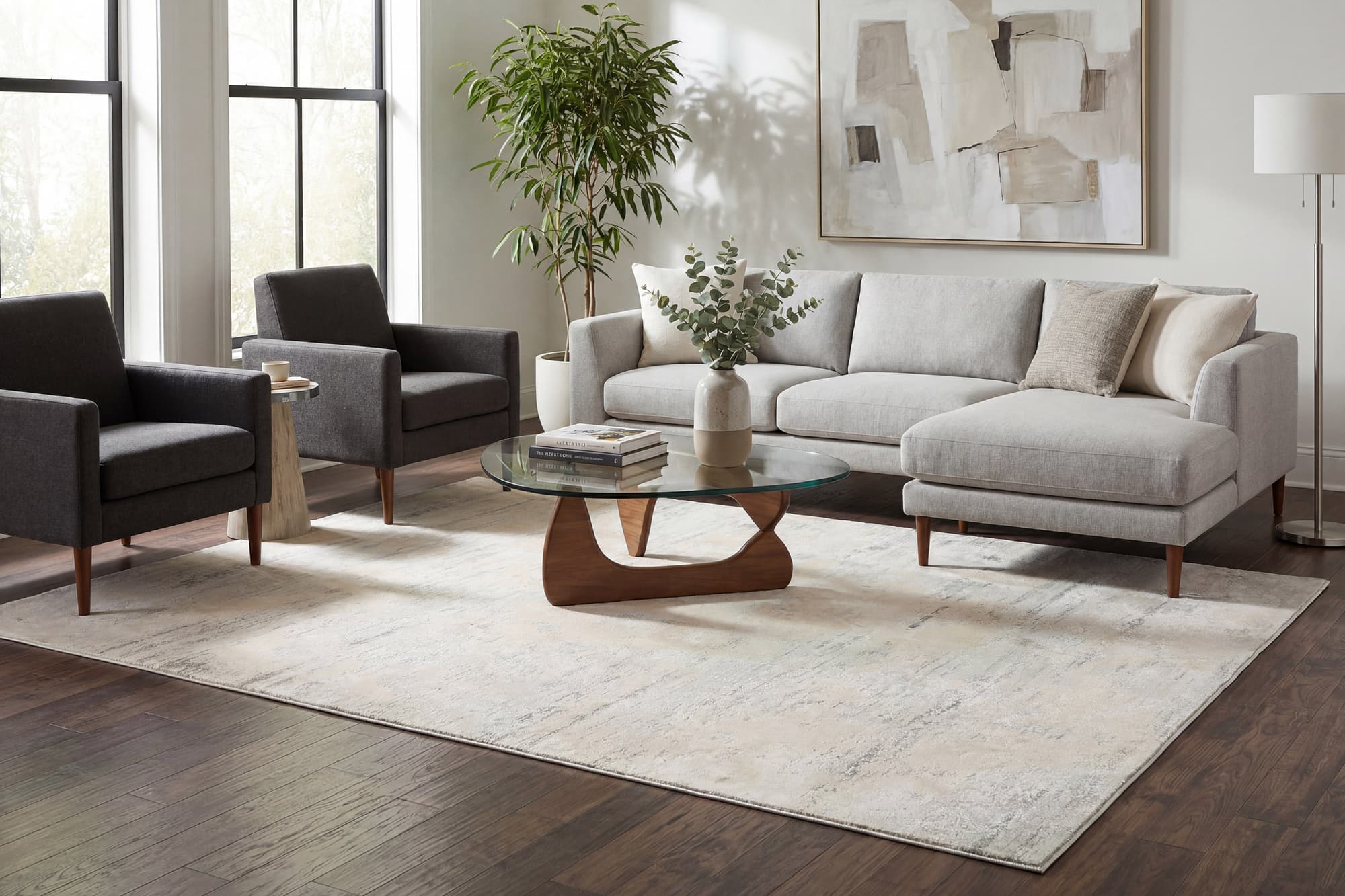 Cove Quartz Ivory/Beige, viscose and shrink polyester, woven in Turkey.
What viscose actually is
Viscose starts as plant cellulose, usually wood pulp. That pulp is chemically dissolved and re-spun into a fine, smooth filament. The raw material is a plant, but the fiber that comes out the other end is engineered, which is why it is called semi-synthetic. It is not natural the way wool or cotton is, and it is not plastic the way polypropylene is. It sits in between.
If you have seen the same rug labeled rayon somewhere else, you are not losing your mind. Viscose and rayon are the same fiber. The FTC permits either name on a label, and the ISO fiber naming standard uses "viscose" for the predominant form of rayon. Two names, one thing.
Why it shines
The whole point of viscose is optics. The filament is smooth and round, so instead of scattering light the way a crimped wool fiber does, it returns light directionally. Stand at one end of the room and the rug reads pale and luminous. Walk to the other end and the same rug reads deep and shadowed. Nothing changed except your angle.
That is the effect viscose was invented to deliver. It was developed as a silk substitute, and on a floor it does the job: a room with a viscose blend underfoot reads dressed rather than merely furnished. If you have been trying to work out why a space feels flat, this is often the missing piece.
The honest tradeoff
Viscose is thirsty. Its moisture regain sits around 13 percent, against roughly 6 percent for cotton, which makes it one of the most absorbent fibers used in floor covering. That matters because wet viscose is weak viscose. Tenacity runs about 1.5 to 2.4 grams per denier dry and drops to about 0.7 to 1.2 wet, so saturating the pile costs it close to half its strength until it dries.
Then there is cellulosic browning. Lignin inside the plant-based fiber migrates with moisture and oxidizes at the surface into yellow or brown discoloration. Dry fiber will not brown. Wet fiber will, and slow drying plus high pH water makes it worse. Because it is a chemical change inside the fiber rather than soil sitting on top, scrubbing does nothing. Correction is a professional job.
Professional cleaners will also tell you viscose can bleed, lose its softness, mat or stiffen from small spills, and that some of that damage is not reversible. Prolonged sunlight weakens the fiber too, through combined light and moisture action. None of this makes viscose a bad rug. It makes it a rug with a job description.
Why we sell blends, not pure viscose
Blending fixes most of the math. Pair viscose with polyester or acrylic and you keep the light-catching surface while adding the resilience viscose does not have on its own. That is why pure viscose rugs are relatively uncommon in retail, and why every viscose piece we carry is a blend, machine woven in Turkey.
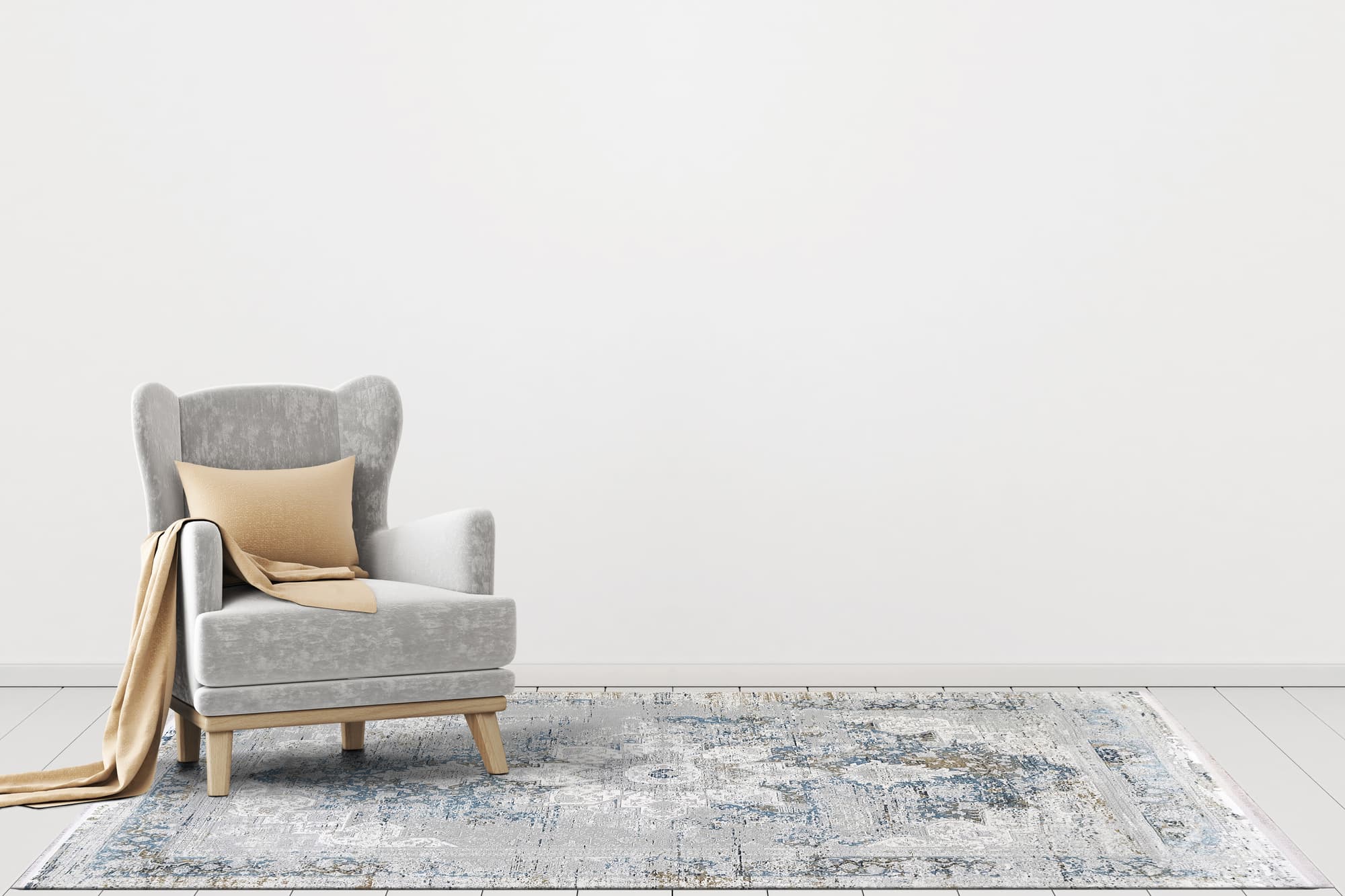 Tempest Ruby Grey/Blue, viscose and shrink acrylic, woven in Turkey.
Here is the range and what each construction does:
- Quartz (Cove) in viscose and shrink polyester. Soft, quiet, tonal.
- Ruby (Tempest) in viscose and shrink acrylic. The most painterly of the group.
- Lara (Chestnut) in space-dyed polyester and viscose. Space dyeing applies several colors along a single length of yarn before weaving, so the surface reads mottled and heathered instead of flat.
- Renaissance (Woodland, Seaside) and Penta (Lyric, Fable) in viscose and polyester. Crisp pattern definition with a low sheen.
These are machine woven on a power loom, and we will never describe them otherwise. What the loom gives you is consistent pile height, precise pattern definition and a price point hand production never reaches.
Where a viscose rug belongs
Think low to medium traffic, dry, and worth looking at.
- Primary and guest bedrooms, where feet are usually bare and clean
- Formal or lightly used living rooms
- Home offices and dressing rooms
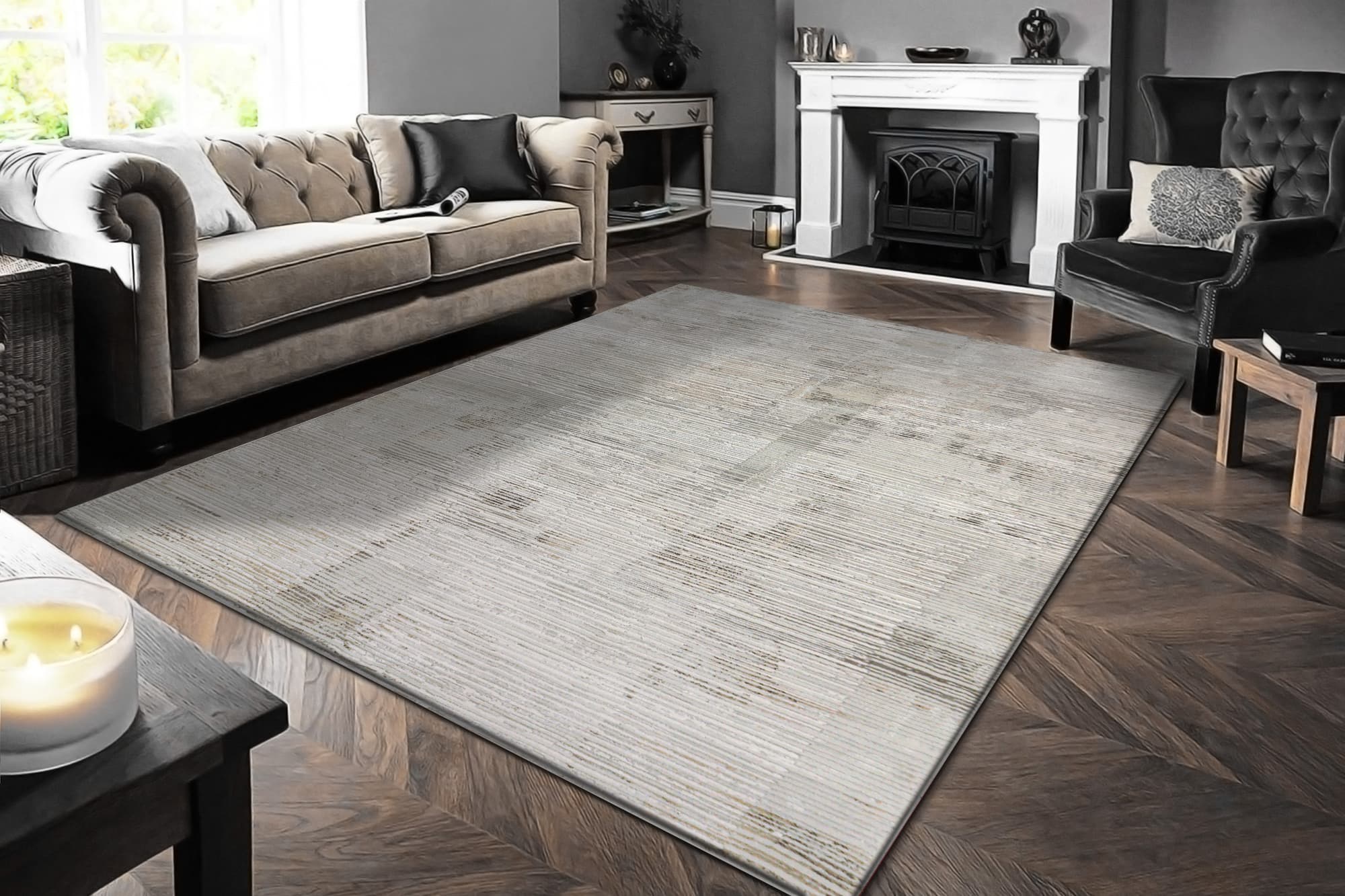 Woodland Renaissance Ivory/Grey, viscose and polyester, woven in Turkey.
Where it does not
Skip viscose in kitchens, bathrooms, entryways, mudrooms, covered patios and under dining tables. Every one of those combines grit, moisture and constant footfall, which is precisely the mix viscose handles worst.
And the one we refuse to soften: viscose blends are not the pet pick. We only claim pet friendliness for our polypropylene weaves, because polypropylene is effectively non-absorbent, so accidents sit on the surface instead of soaking in. Viscose does the opposite, and browning, dye bleed and matting often cannot be undone. If you have a dog, a cat or a puppy in training, shop pet friendly rugs or the wider polypropylene range instead. The same goes for households with toddlers and open cups.
Shading is the fiber working
Light and dark patches across a viscose pile are called shading, and they are a normal property of the fiber rather than a defect. Wherever the pile lies in a different direction, the smooth filament bounces light back differently. Rotating the rug on a schedule evens out both the look and the wear. Before you commit to a direction, stand at your main sightline, usually the doorway, and decide which end of the rug you want facing you.
Care that keeps the sheen
- Vacuum on the bare floor setting with the beater bar off, moving in the direction of the pile.
- Blot spills immediately: press a dry white towel straight down, lift, repeat. Never rub in a circle.
- No steam cleaners and no wet vacs. They are the single most common cause of home-inflicted viscose damage, because they push in far more moisture than the fiber can take. Professionals use low moisture methods for exactly this reason.
- No ammonia, bleach or high alkaline soaps.
- Dry fast with airflow, not heat and not direct sun.
- Use a rug pad. Beyond stopping slip, it lifts the rug slightly off the floor so trapped moisture dries from both sides, and it cushions the pile against crushing in traffic lanes.
Sizing, room by room
In a living room, use the front legs on rule: the rug should be large enough that at least the front legs of the sofa and flanking chairs rest on it. That is roughly 5x8 for a tight apartment grouping, 6x9 for a small room, 8x10 for a medium one and 9x12 for a large one. Leave 6 to 8 inches of bare floor to the walls, or 18 to 24 inches in a big room if you want a deliberate frame.
In a bedroom, extend the rug 18 to 24 inches past the sides and foot of the bed. That usually means 8x10 under a queen and a 9x12 minimum under a king, with 5x7 or 6x9 for a twin. Run it perpendicular to the bed, slid under the lower two thirds, and keep it 10 to 24 inches off the walls.
Runners come 2 to 3 feet wide and 6 to 14 feet long, with 2x6, 2.5x8, 2.5x10 and 3x12 the common cuts. In a 3.5 to 4 foot hallway, a 2.5 to 3 foot width leaves 4 to 6 inches of floor on each side. Round rugs run 4, 6, 8, 9, 10 and 12 feet across.
Dining rooms want 24 inches of rug past the table on every side, 30 to 36 with large chairs, and a 48 inch round table wants an 8 foot round while a 60 inch wants a 9 foot. Useful numbers, but choose polypropylene there rather than viscose.
Frequently asked questions
Is viscose the same as rayon?
Yes. The FTC treats them as the same fiber and permits either name on a tag, and viscose is the ISO name for the predominant form of rayon. A rug tagged viscose and a rug tagged rayon are the same material, so do not read the different word as a different quality level or a different care routine.
Are viscose rugs good for pets?
No, and we will not pretend otherwise. We only claim pet friendliness for our polypropylene weaves, because polypropylene is effectively non-absorbent and accidents sit on top of the fiber rather than soaking into it. Viscose is highly absorbent, so a pet accident can cause browning, dye bleed and matting that is frequently not reversible. With a dog, a cat or a puppy in training, shop the polypropylene collections instead.
Can I steam clean a viscose rug?
No. Steam cleaners and wet vacs push far more moisture into the pile than the fiber can handle, and that is the leading cause of browning, matting and stiffening in viscose. Professional cleaners use low moisture methods on this fiber for exactly that reason. If a spill has gone beyond blotting, call a professional rather than reaching for a machine.
Why does my viscose rug look lighter in one spot and darker in another?
That is shading, and it is a normal property of the fiber rather than a defect. The filament is smooth and reflective, so wherever the pile happens to lie in a different direction the light bounces back at a different angle and the color reads lighter or deeper. Rotating the rug periodically evens out both the appearance and the wear.
What size rug goes under a queen or king bed?
The rug should extend 18 to 24 inches past the sides and the foot of the bed, which usually means 8x10 under a queen and at least 9x12 under a king. Run it perpendicular to the bed and slide it under the lower two thirds so you step onto softness on both sides without burying half the rug under the headboard.
Before you buy
Viscose is a specialist. Give it a bedroom, a formal living room or a study, keep it dry, vacuum it gently, and it will do something no other machine-made fiber quite manages. Browse the Quartz, Renaissance and Penta collections in the shop, or head straight to the polypropylene range if pets share the floor. Shipping is free on every order within the contiguous United States, and returns run 30 days from delivery with no restocking fee, so you can see how the light lands in your own room before deciding.
