
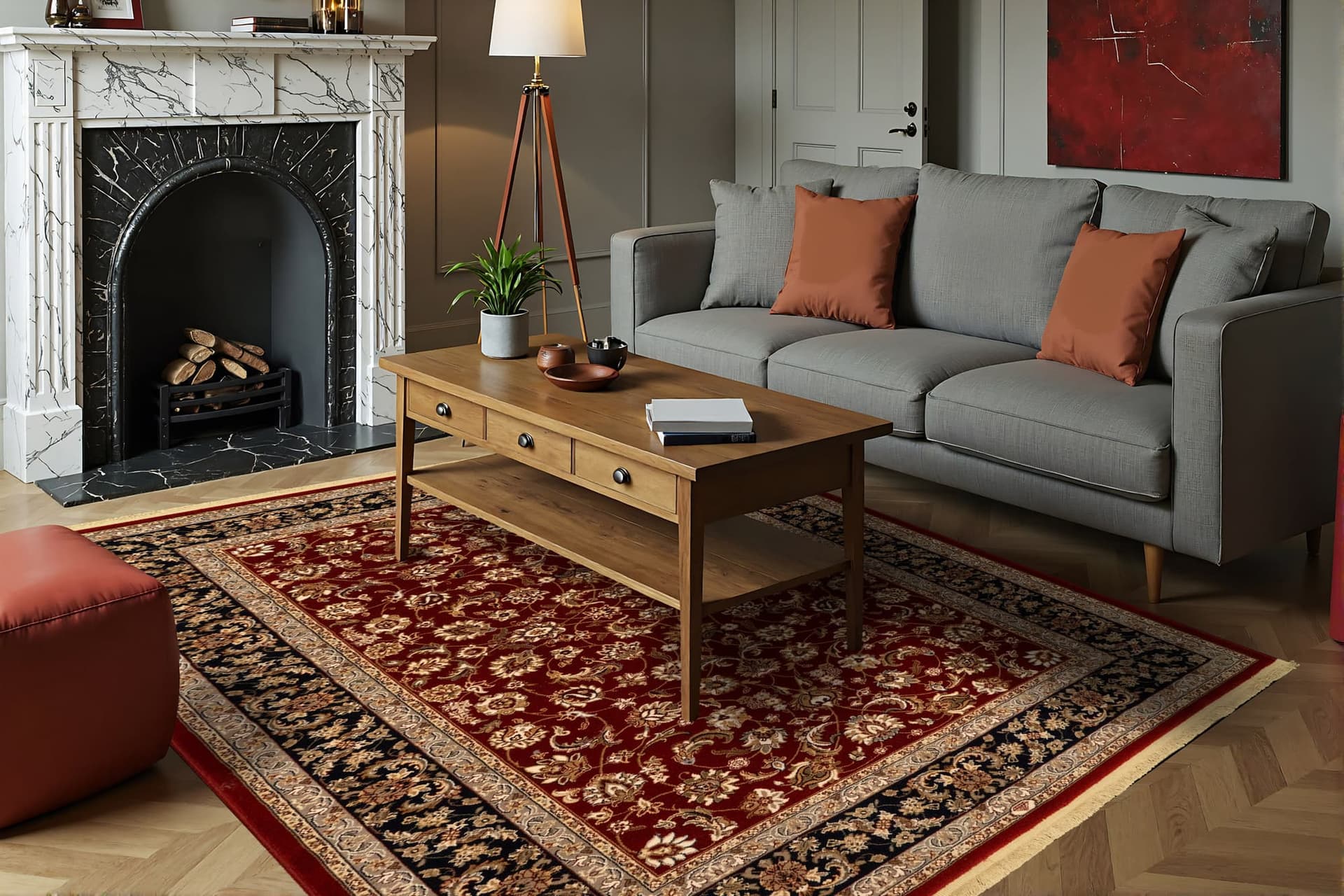
In short: Wool rugs explained simply: wool fiber is naturally resilient, soil-resistant, and springs back from crushing better than most synthetics, which is why quality wool rugs tend to outlast polypropylene in high-traffic spots. Loom Genie's machine-made wool lines, Brilliant (New Zealand wool) and Wade (wool/nylon blend), bring that performance at accessible prices.
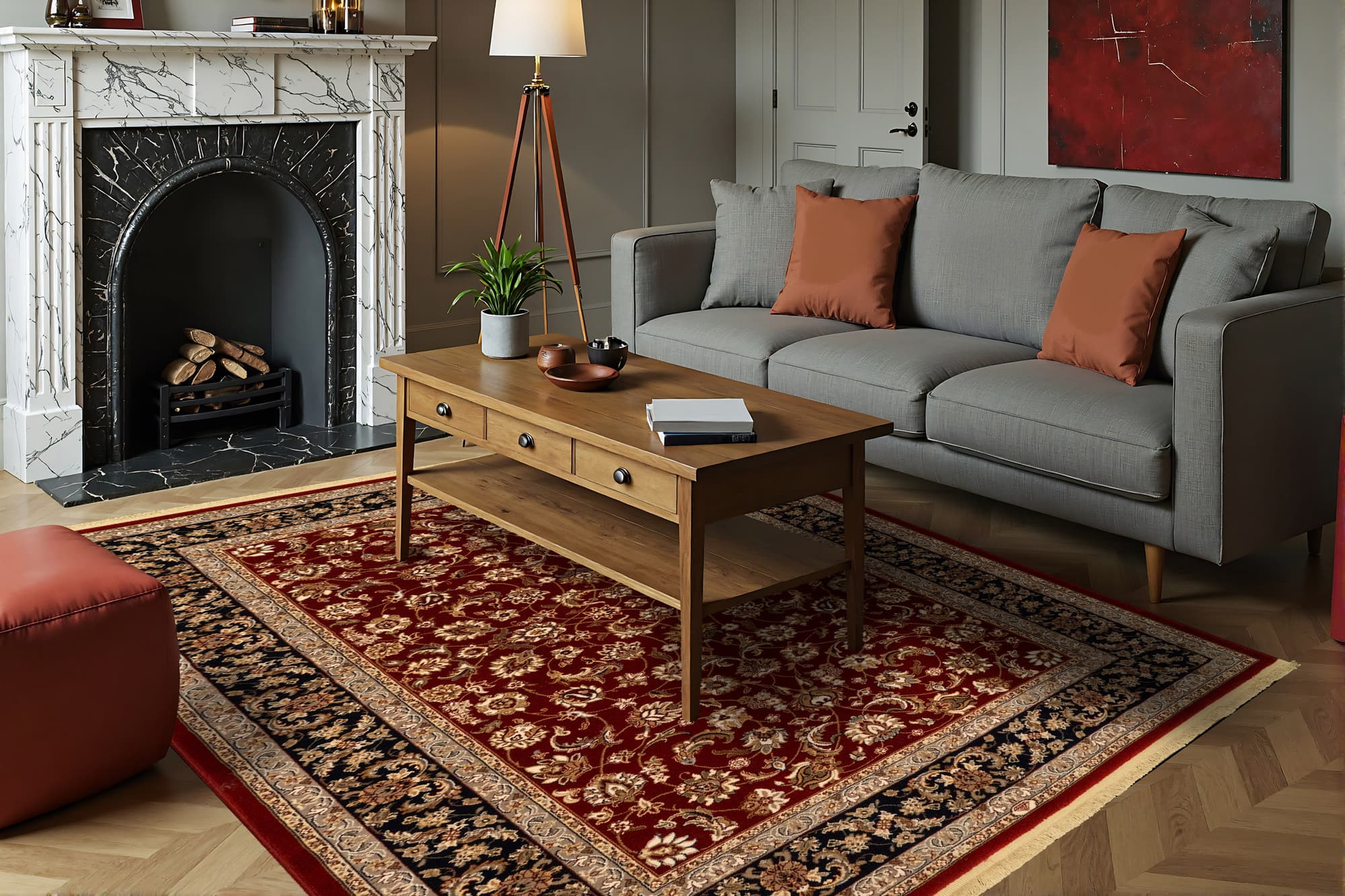
Petunia Brilliant Red, new zealand wool woven in Belgium.
Wool has been used underfoot for thousands of years, and it's still one of the most requested rug fibers for a simple reason: it behaves differently than synthetic fiber, in ways you can actually feel and see over time. This guide breaks down what wool rugs explained really means in practical terms, so you know what you're buying, how to care for it, and where it makes the most sense in your home.
We'll also introduce two wool options in the Loom Genie catalog: Brilliant, made from New Zealand wool and woven in Belgium, and Wade, a wool and nylon blend woven in Turkey. Both are machine-made, which matters for price and durability. We'll explain exactly what that means below.
What wool is, and why it feels different underfoot
Wool is a protein fiber (keratin-based), and each strand has overlapping cuticle scales, similar in concept to shingles on a roof. Those scales naturally repel dust and dirt particles at the surface, which slows down how quickly a rug looks soiled compared to smooth synthetic fibers.
Wool is also naturally elastic. When fibers get compressed by foot traffic or furniture legs, they don't just flatten and stay that way; they spring back. Over years of daily use, that resilience is a big part of why wool rugs resist matting and permanent furniture indentations better than many synthetic alternatives.
There's a practical care angle here too: wool contains natural lanolin, a waxy coating that helps repel water and stains right at the surface. That said, wool is still a porous fiber. It can absorb and hold moisture if a spill isn't blotted up promptly, so lanolin buys you time, not immunity.
New Zealand wool: why it's a standout source
Not all wool is the same, and where it comes from matters. New Zealand's temperate climate and pasture conditions are widely cited in the rug trade for producing wool that's notably clean, bright white, and uniform in fiber length. That consistency lets dye take more vibrantly and evenly compared to some other wool sources, which is a big deal if you want a rug with rich, true color rather than muddy or uneven tones.
New Zealand wool fiber is also commonly described as fine, smooth, and strongly elastic, meaning it springs back well after crushing. In the broader wool market, it's generally positioned as a strong quality-to-cost tier among wool sources.
This is exactly the profile behind our Brilliant line, made from New Zealand wool and woven in Belgium. If you want the classic look and feel of a genuine wool rug with dependable color clarity, it's worth a look in our wool rugs collection.
Wool and nylon blends: what the blend actually adds
Not every wool rug on the market is 100% wool, and that's not a downgrade when it's done well. Wool/nylon blends are a standard approach for machine-made wool-blend rugs. The idea is straightforward: you keep wool's natural texture, softness, and resilience, and you add nylon's abrasion resistance on top, which helps the pile resist crushing in busier parts of the home.
Our Wade line, a wool and nylon blend woven in Turkey, follows this exact logic. It's a smart middle ground for shoppers who want the hand and warmth of wool but also want a little extra insurance in a hallway, entryway, or family room. Browse it alongside other options in our living room rugs landing page.
Wool vs. polypropylene: an honest durability comparison
Sticker price tells only part of the story. Machine-made wool rugs generally cost more upfront than comparable polypropylene rugs in the same size. On price alone, polypropylene looks like the easy choice.
But durability changes the math. Wool's natural resilience means it typically resists crushing and matting longer than polypropylene in high-traffic areas, so a wool rug can hold its look well after a synthetic rug in the same spot has started to flatten and show wear. Construction quality and how much foot traffic an area gets matter as much as fiber choice, but when you weigh price against how long a rug keeps its good looks, wool often ends up the better value, not just the nicer one.
If your household includes pets and you want a fiber built for stain resistance and easy cleanup, our pet-friendly rugs page focuses on synthetic options like polypropylene and polyester, since wool isn't marketed as a pet-friendly fiber.
Caring for a wool rug the right way
Wool care isn't complicated, but a few rules matter:
- Vacuum regularly using a suction-only setting. Skip the beater bar or rotating brush, which can pull and shed fibers.
- Blot spills immediately with a dry cloth. Don't rub, which can push liquid deeper and damage fiber structure.
- Spot clean with a damp cloth and a mild, wool-safe detergent.
- Never soak, machine-wash, or steam clean a wool rug. Trapped moisture and heat can cause shrinkage, discoloration, odor, or even mold.
- Schedule periodic professional cleaning to keep a wool rug looking its best long-term.
Treat wool gently around moisture and heat, and it will reward you with years of good looks.
Shedding is normal, not a defect
If your new wool rug sheds loose fibers in the first few weeks, don't panic. New wool rugs, especially dense ones, commonly shed loose fiber ends left over from manufacturing. Shedding is typically heaviest in the first few months and tapers off substantially with regular suction-only vacuuming. It's a normal break-in phase across the wool rug industry, not a sign anything is wrong with your rug.
Where wool makes the most sense in your home
Wool's natural resilience, softness, and soil resistance make it a great fit for living rooms and bedrooms, spaces where people sit, walk barefoot, and want a rug that feels good underfoot for years. It's also a common recommendation for allergy-conscious households, since wool's scaled fiber structure and low static are cited as reasons it doesn't generate the same dust-attracting static as some synthetics (this is general trade guidance, not a medical claim, so individual sensitivities vary).
Where wool is less ideal: high-moisture areas like bathrooms or mudrooms, or homes with heavy pet traffic and frequent accidents, where a synthetic rug or a wool/nylon blend like Wade can handle more frequent cleaning without the moisture concerns.
Sizing and placement for a wool rug
Standard living-room sizes are typically 5x8, 8x10, and 9x12, scaled to your room and furniture. A helpful rule of thumb: let your rug extend roughly 6 to 8 inches beyond the sides of your sofa or seating arrangement so furniture doesn't look like it's floating off the edge. Leave about 18 to 24 inches of bare floor between the rug's edge and the wall for a balanced look, and at minimum, make sure the front legs of your sofas and chairs rest on the rug.
If you're outfitting a larger living room, our 8x10 area rugs landing page is a good starting point. For hallways or narrow spaces, check out runner rugs, many of which are available in the same wool and wool-blend constructions.
A note on machine-made wool
Both Brilliant and Wade are machine-made wool rugs. That's a meaningful distinction worth understanding, not a mark against either category. Machine-made construction sits at the more accessible end of the wool price spectrum while still delivering wool's core benefits: resilience, natural soil resistance, and long-term durability. You're getting genuine wool fiber performance at a more approachable price point.
Frequently asked questions
Do wool rugs shed a lot?
Some shedding is normal, especially in the first few months as loose fiber ends from manufacturing work their way out. It's typically heaviest early on and tapers off significantly with regular vacuuming on a suction-only setting.
Can wool rugs get wet or be steam cleaned?
Wool tolerates light moisture reasonably well, thanks to natural lanolin, as long as spills are blotted quickly. However, it should never be soaked, machine-washed, or steam cleaned, since trapped moisture can cause shrinkage, discoloration, or mold. Blot spills immediately and stick to damp-cloth spot cleaning with wool-safe products.
Are wool rugs actually more durable than synthetic rugs?
Wool resists crushing and springs back from compression better than most synthetics over the long term. Quality wool rugs are generally expected to hold their look in high-traffic spots longer than comparable polypropylene rugs, though construction quality and traffic level matter just as much as fiber type.
What does a wool/nylon blend rug add compared to 100% wool?
Blending wool with nylon, a common approach in machine-made rugs like Loom Genie's Wade line, keeps wool's natural texture and resilience while adding nylon's abrasion resistance. That combination can help the pile resist crushing in heavier-traffic spots in your home.
Is New Zealand wool better than other wool?
New Zealand's climate and pasture conditions are widely cited for producing notably clean, bright white, uniform wool fiber that takes dye clearly and stays soft. It's generally positioned as a strong quality-to-cost wool source, which is why we use it in our Brilliant line.
Find your wool rug
Whether you're drawn to the bright, dye-clear look of New Zealand wool in our Brilliant line or the added durability of a wool/nylon blend in Wade, a quality wool rug is an investment that pays off in years of comfort and good looks. Head to our shop to browse sizes, colors, and styles, and find the wool rug that fits your space.
