
In short: Heatset polypropylene is the rug for busy rooms, kids and pets: it resists stains and fading and cleans with soap and water. Polyester brings softer pile and deeper color. Viscose blends add sheen but mark easily, so keep them in calm rooms. Wool is warm and resilient, and needs a gentler hand.

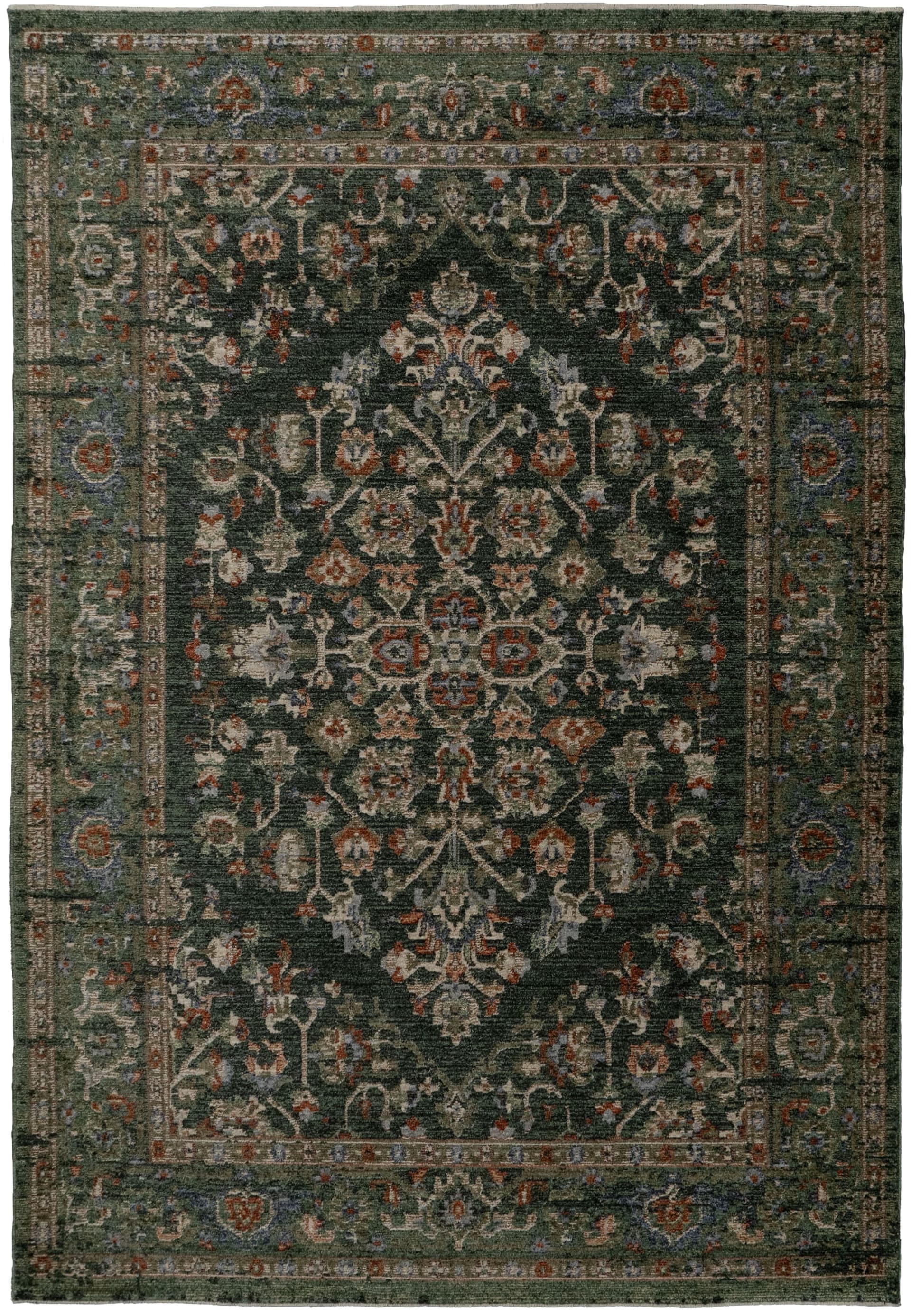
Orchard Mehari Ivory/Rust/Multi, decolan polypropylene woven in Belgium.
Rug shopping gets easier once you know what the rug is made of. The fiber decides how it feels under bare feet, what happens when a glass tips over, and whether the dog's claws leave a mark. Here are the four fibers we actually sell, plain rules for matching fiber to room, and a care note for each.
Heatset polypropylene
Polypropylene is the workhorse of machine-made rugs, and heatset polypropylene is the version we carry. The yarn is heat-treated after spinning, which gives the pile a fuller look and locks the color into the fiber.
How it feels: smooth, dense and a little springy. Not as soft as polyester or as warm as wool, but comfortable and consistent.
Spills, traffic and pets: this is where it earns its keep. Because the color is set into the fiber, most spills blot up with a damp cloth and mild soap, and it does not fade in a sunny room. The dense low pile has no loops for a claw to catch, sheds nothing, and lets an accident be blotted rather than soaked in. It is the fiber behind our pet-friendly rugs.
Where it belongs: living rooms, hallways, entryways, kitchens, kids' rooms. Anywhere the front door, the dog and the snack bowl meet.
Where it does not: if you want a plush bedroom rug to sink your toes into, polypropylene will feel firm. That is a preference, not a flaw.
Collections: our Belgian heatset lines are Ancient Garden (the flagship, with Persian and traditional patterns and the widest size range), Masai, Mehari and Couture. Belgian looms carry a higher point count, so fine pattern detail holds up. Browse them all under polypropylene rugs.
Polyester and space-dyed polyester
Polyester takes dye beautifully, so polyester rugs have the deepest, most saturated color of anything on the floor, and the pile is noticeably softer than polypropylene.
How it feels: soft, smooth, a touch silky. Kids sit on it without complaint.
Spills, traffic and pets: polyester is a synthetic, so water-based spills blot up well and it does not hold odor the way a natural fiber can. It handles regular household traffic and is fine with pets. Oily stains (cooking grease, lotion) are its weak spot, so treat them promptly. The pile can flatten a little in a doorway over time.
Space-dyed polyester is the same fiber dyed in alternating tones along the strand, so each yarn carries several shades. The multi-tonal surface hides crumbs and footprints better than a flat solid. We explain it in what is a space-dyed rug.
Where it belongs: bedrooms, living rooms, playrooms. Where it does not: right inside the front door, where grit favors polypropylene, and in front of the stove.
Collections: most of our Turkish lines, including Atlanta, Milano, Legacy and Rori (recycled polyester). Kyra is our space-dyed line. See them under polyester rugs.
Viscose and viscose blends
Viscose is a plant-derived fiber with a silky sheen that catches light. Blended with a synthetic, it gives a rug a soft, luminous, formal look at a fraction of the cost of silk.
How it feels: the softest surface we sell. Cool, smooth and glossy, with a nap that shifts tone as you walk across it.
Spills, traffic and pets: this is the delicate one, and we say so plainly. Viscose absorbs liquid, and water leaves a visible mark where it sat. It is not a pet fiber. Traffic flattens and dulls the sheen faster than on synthetics. Treat it like an upholstered chair, not a doormat.
Where it belongs: bedrooms, formal sitting rooms, a dressing area. Low traffic, shoes off, no food.
Where it does not: kitchens, entryways, dining rooms, hallways, or any house where a puppy is still learning the rules.
Collections: Lara, Pandora, Ruby and Quartz, all under viscose rugs.
Wool
Wool is the fiber people picture when they think of a good rug. It feels warm and substantial, springs back after furniture is moved, and ages well when cared for.
How it feels: dense, warm and cushioned. The heaviest hand of the four.
Spills, traffic and pets: wool resists light soil and handles ordinary living room traffic well. It is not a pet rug in our range: it absorbs liquid, holds odor if an accident sits, and a claw can pull a tuft. New wool sheds for the first few months, which is normal. It costs more than synthetics and gives you the coziest floor in the house.
Where it belongs: living rooms, bedrooms, studies. Where it does not: damp basements, mudrooms, and homes with a pet that has accidents.
Collections: Brilliant, woven in Belgium from New Zealand wool, and Wade, a wool and nylon blend from Turkey. Both are under wool rugs.
Which fiber for which room
Rules that hold up in real houses:
- Front door, hallway, mudroom: heatset polypropylene. Nothing else takes grit and wet boots as well.
- Kitchen: polypropylene. Never viscose or wool.
- Family room with kids or pets: polypropylene first, polyester second.
- Adult living room, shoes off: any of the four. Wool for warmth, polyester for color, viscose blend for sheen.
- Bedroom: polyester or a viscose blend for softness, wool for warmth.
- Dining room or sunny room: polypropylene. Chairs scrape, food falls, and heatset yarn does not fade.
- Nursery or playroom: polypropylene or polyester. Our Kidz line is built for it.
- When in doubt: polypropylene. It forgives the most.
For hallways and entryways in more depth, read the best rugs for high-traffic areas.
Caring for each fiber
All four share the basics: vacuum with the beater bar off, blot spills right away (never rub), use mild soap and warm water, skip bleach and solvents, give the rug a quarter turn once or twice a year, and use a rug pad on hard floors, sized about an inch smaller than the rug on every side.
Polypropylene: the easiest. Mild soap and water handle almost everything. Rinse, then blot dry. Avoid high-heat steam, which can distort the heatset pile.
Polyester: same routine. Get to oily stains early with a drop of dish soap in warm water. Vacuum regularly so the soft pile does not pack down.
Viscose: blot, then stop. Do not add water; water marks are the most common damage and are hard to remove at home. Anything beyond a dry blot goes to a professional cleaner. Vacuum on suction only.
Wool: blot, then dab with a little mild soap in cool water. No hot water, no bleach. Expect some shedding early on, and vacuum on suction only until it settles.
Frequently asked questions
What is the best rug material for dogs and cats?
Heatset polypropylene, with polyester a close second. Both are synthetic, so accidents blot up off the surface rather than soaking in, and neither holds odor the way wool does. Polypropylene adds a dense, loop-free pile that a claw cannot snag, and it sheds nothing itself.
Avoid wool and viscose for pets. Wool absorbs liquid and a claw can pull a tuft loose; viscose water-marks and dulls quickly. Our pet-friendly rugs page lists only synthetic rugs for that reason.
Do machine-made polypropylene rugs look cheap?
Not the Belgian ones. The looms Dynamic Rugs uses in Belgium run at a higher point count than typical machine looms, so a Persian medallion in Ancient Garden keeps its fine detail instead of blurring, and heatsetting gives the yarn a fuller, more finished look. What you give up compared with wool is warmth and weight, not appearance.
Can I put a viscose rug in a dining room?
We do not recommend it. Viscose absorbs liquid and shows a mark wherever water sits, so a spilled glass under the table becomes a ring. Chairs dragging in and out also flatten the pile faster than on a synthetic. Keep viscose in a bedroom or formal sitting room and choose polypropylene for the dining room, where a 9x12 usually gives a six-seat table the 24 inches of clearance it needs on every side.
Is wool worth the extra cost?
In a shoes-off living room or bedroom, with no pets that have accidents, wool gives you the warmest, most cushioned floor of the four. Near a door, in a kitchen, or in a house with a young dog, put the money into a larger polypropylene rug instead. The bigger rug will do more for the room than the pricier fiber would.
Every rug we sell is machine-made in Belgium or Turkey, shipping is free in the contiguous US, and you have 30 days to return it with no restocking fee. Start with the fiber page that fits your room, or browse everything in the shop.
